How to Create a Stunning Spilled Flower Pot Display
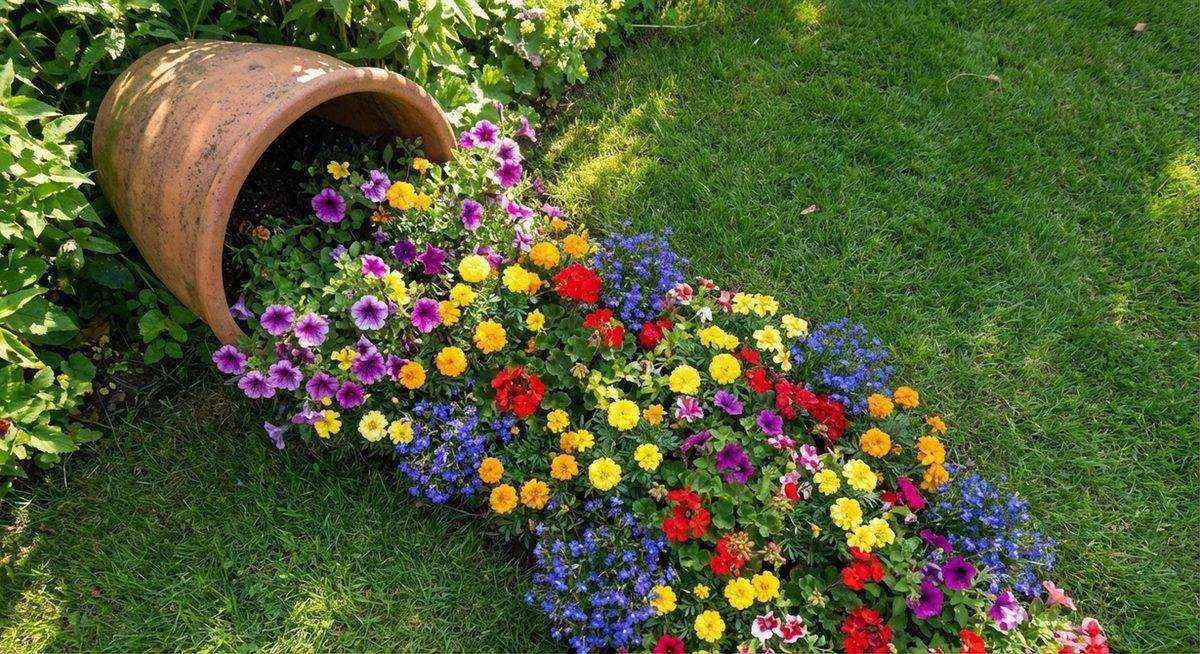
The spilled flower pot — a seemingly toppled container releasing a river of blooms across a lawn or garden bed — ranks among the most charming and achievable garden features. The illusion of spontaneous abundance requires surprisingly little effort, and the result adds a whimsical focal point that draws compliments throughout the growing season.
Selecting Your Container
The pot itself sets the tone. A large terracotta pot, aged with moss or mineral deposits, creates the most convincing effect. The opening should be wide enough to establish a natural-looking origin point for the flower stream — at least 30 centimeters in diameter. Ceramic urns, wooden barrels, and even old watering cans work well as alternatives, each lending a different character to the display.
Position the pot on its side at a slight angle, with the opening facing downhill if any slope is available. A partially buried pot — with the base nestled into the soil — looks more natural than one simply laid on the surface. Wedge a stone or buried brick beneath the pot to fix its angle and prevent rolling.
Planning the Flower Stream
The most effective spilled displays follow a tapered shape: wide at the pot opening and narrowing as the stream extends outward, typically spanning one to two meters. Sketch the outline on the ground with a garden hose or chalk before planting. Gentle curves mimic the flow of liquid far more convincingly than straight lines.
Prepare the planting area by loosening soil to a depth of 15 centimeters and mixing in compost. Inside the pot itself, add potting mix to anchor the plants closest to the opening — these establish the critical transition from container to ground.
Choosing the Right Plants
Low-growing, mounding varieties produce the most convincing spilled effect. Proven performers include:
- Lobelia — Cascading habit in vivid blues, purples, and whites
- Alyssum — Dense white or purple carpet, sweetly scented
- Creeping Phlox — Spring-blooming ground cover in pinks and lavenders
- Portulaca — Heat-loving succulents with jewel-toned flowers
- Petunias — Trailing varieties in virtually any color
Single-color plantings generally read more clearly than mixed palettes. A monochromatic stream of blue lobelia or white alyssum creates a stronger visual metaphor than a patchwork of colors.
Planting Technique
Begin inside the pot, planting densely to create the illusion that the container was genuinely overflowing. Work outward from the opening, spacing plants 10 to 15 centimeters apart and staggering rows for fullness. The stream should be densest near the pot and gradually thin toward its end, with a few isolated plants suggesting the flow is tapering off.
Mulch lightly between plants with fine bark or gravel that matches the surrounding garden bed. This suppresses weeds and maintains a tidy appearance as the plants fill in.
Seasonal Variations
The spilled pot concept adapts beautifully to every season. Spring calls for pansies or violas; summer for petunias or marigolds; autumn for ornamental kale or chrysanthemums. In winter, an arrangement of pinecones, berry branches, and evergreen cuttings spilling from the pot maintains visual interest without living plants.
For a permanent installation, consider low-maintenance ground covers like creeping thyme or sedum. Once established, these require minimal care and return reliably year after year, the pot serving as a perennial garden anchor.
Sources & Further Reading
You May Also Like