10 Home Gym Design Ideas for Every Space and Budget
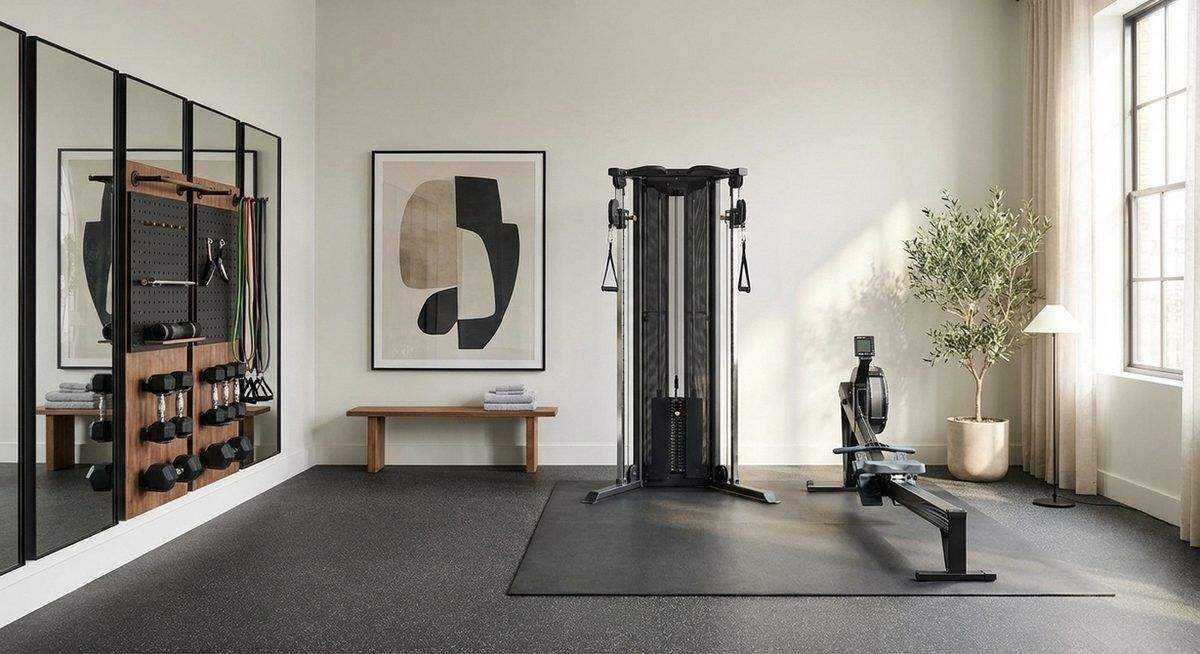
The home gym succeeds or fails on design as much as equipment. A well-designed workout space motivates daily use; a poorly designed one becomes a storage room within months. The difference lies in flooring, lighting, ventilation, and the spatial arrangement that makes exercise feel like a choice rather than an obligation.
1. The Garage Conversion
Garages offer the floor space and structural capacity for heavy equipment — squat racks, plate-loaded machines, heavy bags — that indoor rooms cannot accommodate. Rubber stall mats over the concrete floor provide cushioning and noise reduction. Insulation on the garage door and walls moderates temperature extremes. A wall-mounted fan or portable air conditioning unit addresses ventilation.
2. The Spare Bedroom
A spare bedroom handles bodyweight training, yoga, light free weights, and cardio machines comfortably. The key is clearing the room completely — a half-bedroom, half-gym serves neither function well. Full-length mirrors on one wall create the visual feedback and spatial expansion that make the room feel like a studio. Rubber interlocking tiles protect the flooring beneath.
3. The Multi-Purpose Room
When a dedicated gym room is not available, wall-mounted equipment — fold-down squat racks, pull-up bars, resistance band anchors — allows a room to function as both living space and gym. Equipment stores flat against the wall and deploys in minutes. A rolled yoga mat and a set of adjustable dumbbells fit in a closet when not in use.
4. Mirrors
Full-wall mirrors serve three purposes: form feedback during exercises, visual space expansion, and light redistribution. Position mirrors on the wall facing the primary exercise position so form can be checked during lifts and movements. Gym-grade acrylic mirrors are lighter, safer, and more affordable than glass alternatives.
5. Flooring
Rubber flooring is the universal home gym surface — it absorbs impact, reduces noise, protects subfloors, and provides stable footing. Interlocking rubber tiles (15 to 20 millimeters thick) install without adhesive and can be removed when moving. For heavy lifting areas, stacked horse stall mats (20 millimeters each) handle dropped weights without damage.
6. Lighting
Bright, evenly distributed lighting prevents shadows that interfere with mirror-based form checking. LED panels or shop lights provide adequate lumens at low cost. Avoid recessed downlights directly above the bench press position — lying face-up under a bright fixture is unpleasant and potentially dangerous. Daylight-balanced bulbs (5000K) maintain alertness and energy during workouts.
7. Sound System
A Bluetooth speaker or wall-mounted sound system provides the music that studies consistently link to improved workout performance. Position speakers at ear height rather than on the floor for optimal sound quality. Waterproof or sweat-resistant speakers handle the humidity that intense workouts generate.
8. Ventilation
Vigorous exercise generates heat and moisture. A ceiling fan, portable fan, or dedicated HVAC supply maintains comfortable temperature and air quality. Opening a window — when available — provides natural ventilation that no mechanical system fully replicates.
9. Storage
Wall-mounted racks for weights, hooks for resistance bands, and shelves for smaller equipment keep the floor clear for movement. Organized equipment invites use; cluttered equipment invites avoidance.
10. Motivation
The design details that keep a home gym in use are often non-functional: a motivating color on one wall, a whiteboard for tracking progress, a view of the outdoors through a window, or simply a clean, well-maintained space that feels worth entering. The best equipment in an uninspiring room loses to basic equipment in a space that feels alive.
Sources & Further Reading
You May Also Like