Imaginative Kids Playroom Ideas Parents Will Love Too
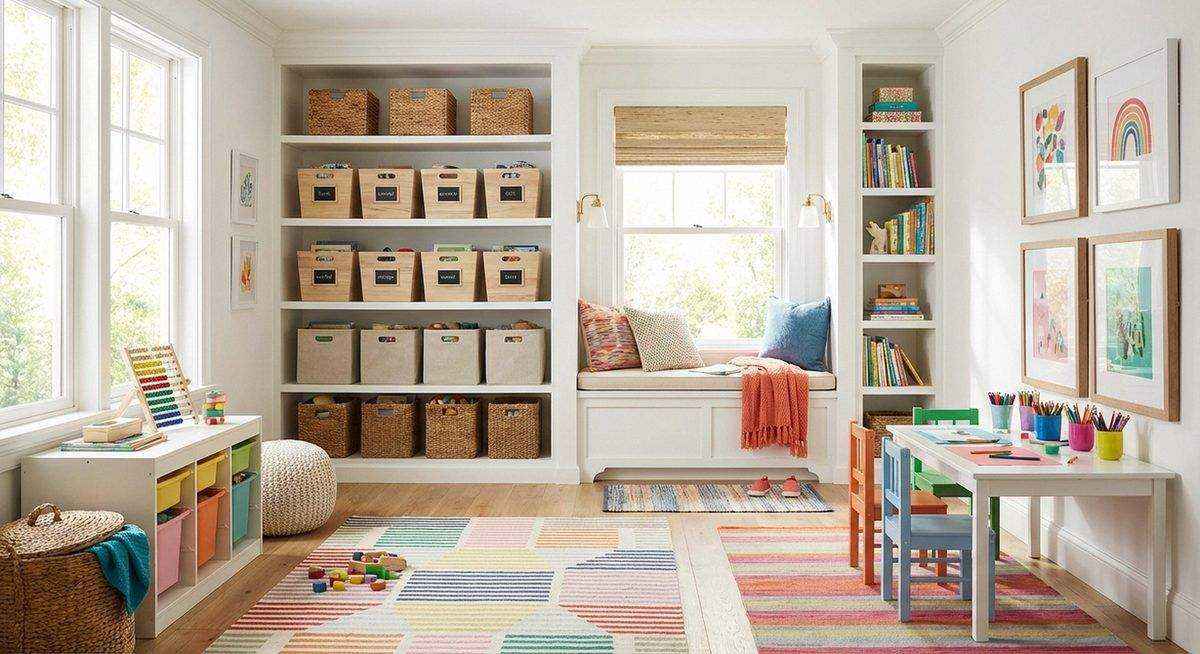
The ideal playroom achieves what seems contradictory: a space that encourages creative chaos during play yet returns to order when the session ends. The design must anticipate mess, enable imagination, and provide the storage infrastructure that makes cleanup possible rather than aspirational.
Zone Planning
Dividing the playroom into activity zones creates natural organization. A reading nook — a corner with soft seating, good lighting, and book-accessible shelving — establishes that books belong in one place. An art station — a table with washable surface, art supply storage, and easy-to-clean flooring beneath — contains the most mess-prone activity. An open floor area for building, imaginative play, and active games provides the blank canvas that structured zones cannot.
Storage as Architecture
The playroom’s storage system is not a supporting element — it is the room’s most important design decision. Low, open shelving with labeled bins allows children to find and return toys independently. Bins should be sized to the toy categories they hold: shallow bins for puzzles and games, deep bins for stuffed animals and dress-up clothes, narrow bins for art supplies and building sets.
Closed storage — cabinets with doors, storage benches with lids — hides the visual clutter that open bins cannot. Reserve closed storage for toys in rotation, seasonal items, and supplies that adults manage (paint, scissors, glue). The combination of open and closed storage maintains both accessibility and visual calm.
The Reading Nook
A dedicated reading space signals that books are valued and reading is a pleasurable activity, not a chore. A canopy over a cushioned corner, a window seat with built-in bookshelves, or even a converted closet with soft lighting and pillows creates a retreat within the playroom. Front-facing book displays — where covers rather than spines face outward — invite browsing and make book selection accessible to pre-readers.
The Art Corner
An easel, a child-height table with chairs, and wall-mounted paper roll dispenser establish a creative zone. Display finished artwork on a wire system with clips — easy to update and less damaging than tape or tacks. A drying rack for wet paintings and a designated bin for works in progress keep the creative process organized without interrupting it.
Flooring
Durable, easy-to-clean flooring is non-negotiable. Vinyl plank, sealed concrete, or laminate handles spills, paint drips, and heavy toy impacts without damage. Area rugs — washable and replaceable — define zones and add comfort underfoot without committing the entire floor to a surface that absorbs stains.
Growing With the Child
A playroom designed for a toddler will serve a school-age child for less than three years if it cannot evolve. Modular furniture that adjusts in height, storage systems that reconfigure for different toy categories, and a neutral color base that accommodates changing interests extend the room’s relevance. The toddler’s ball pit area becomes the seven-year-old’s reading fort becomes the twelve-year-old’s gaming corner — same room, same bones, different contents.
Sources & Further Reading
You May Also Like