Thoughtful Twins Nursery Ideas for Shared Spaces
Designing a nursery for twins doubles the functional requirements without doubling the available space. The challenge is accommodating two cribs, two wardrobes worth of clothing, and twice the gear — while maintaining the calm, nurturing atmosphere that every nursery should provide. The solution lies in thoughtful layout, disciplined storage, and a design approach that treats the room as one cohesive space rather than two halves.
Layout Strategies
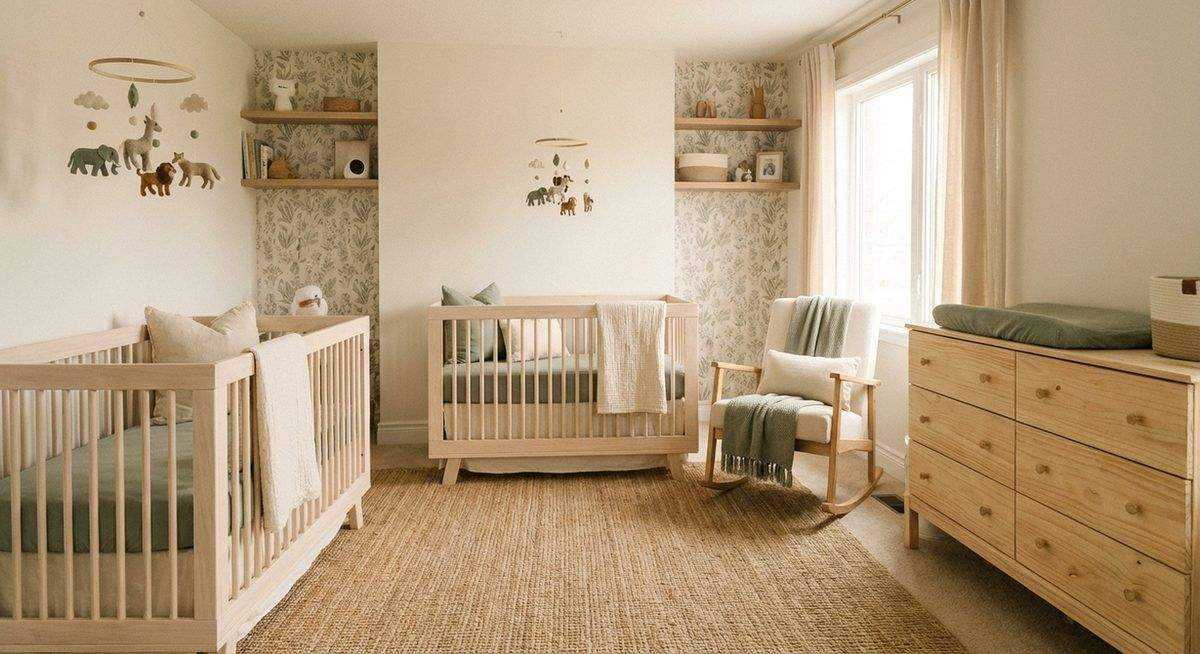
The most common arrangement places two cribs side by side along the longest wall, separated by a shared nightstand or changing table. This linear layout works well in rectangular rooms and allows both babies to be accessed from the same side. A rocking chair or glider positioned opposite the cribs provides a nursing and feeding station with a clear view of both beds.
In square rooms, an L-shaped arrangement — cribs along two adjacent walls — opens the center of the room for play space as the children grow. This layout provides more separation between sleeping areas, which can be beneficial when one twin sleeps more lightly than the other.
For very small rooms, end-to-end cribs along a single wall maximize floor space. The cribs share a headboard wall, and a single mobile or wall decoration serves both.
Symmetry vs. Individuality
Matching cribs in the same finish create visual order and simplicity — a particularly welcome quality when the room will inevitably contain double the usual nursery chaos. However, a degree of individuality helps each child develop a sense of their own space. Differentiated crib bedding, distinct wall art above each crib, or personal name signs distinguish individual territories within the shared room.
The balance point: unified furniture and color palette, individualized accessories and soft goods. The room reads as one design, but each child recognizes their corner.
Storage Solutions
Twins generate roughly twice the laundry, twice the diaper supplies, and twice the outgrown clothing to store. A tall dresser with clearly divided drawers — left side for one twin, right side for the other — creates organized storage without requiring two dressers. A closet organizer with double hanging rods at appropriate heights doubles the usable closet capacity.
Under-crib storage bins hold off-season clothing and backup supplies. A wall-mounted shelf system above the changing area keeps diapers, wipes, and creams within arm’s reach — essential when you are changing two babies in rapid succession and cannot step away to retrieve supplies.
The Feeding Station
A wide glider or rocking chair — broad enough to accommodate a twin nursing pillow — positioned between the two cribs creates an efficient feeding station. A side table with adequate surface area for bottles, burp cloths, water, and a phone keeps necessities accessible during night feeds. Dimmable lighting or a dedicated night light preserves the calm atmosphere during middle-of-the-night sessions.
Growing With Them
Convertible cribs that transform into toddler beds extend the room’s useful life without requiring new furniture. Choosing a neutral, sophisticated color palette — sage and cream, navy and white, warm gray and natural wood — ensures the room remains appropriate as the children grow beyond the infant stage. The dinosaur mobile will come down; the wall color should still work when it does.
Sources & Further Reading
You May Also Like