Sunny Yellow Living Room Ideas for a Cheerful Home
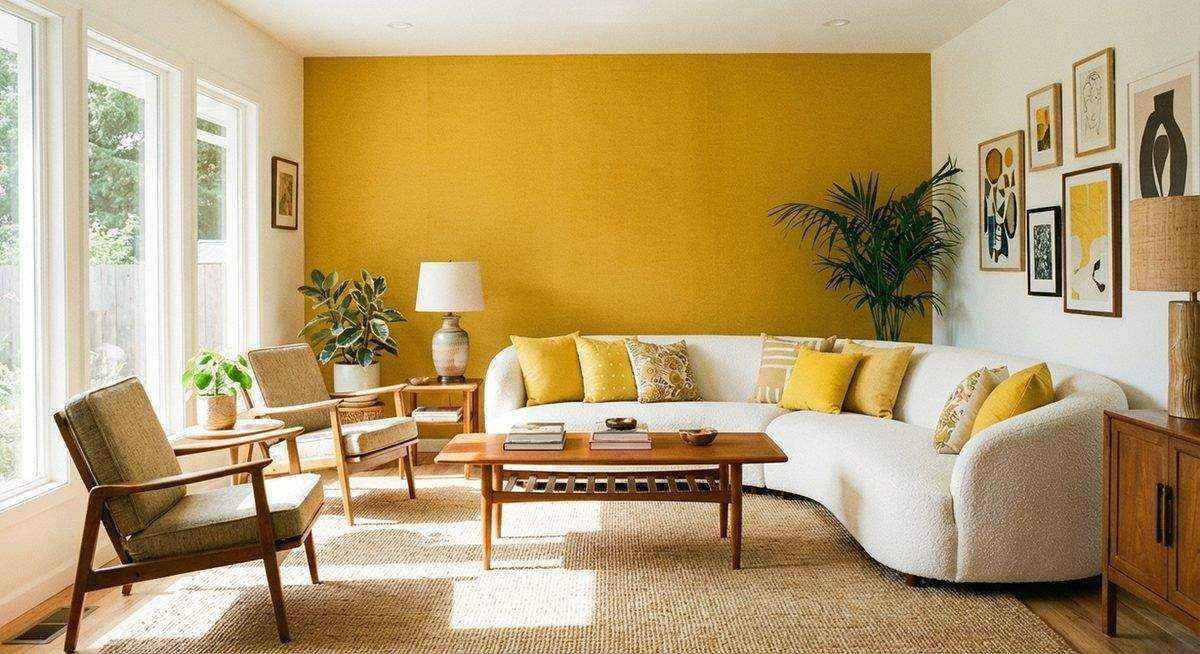
Yellow is the most emotionally charged color in the interior design palette — associated with sunlight, optimism, and warmth, but capable of veering toward anxiety and visual fatigue when applied without restraint. The living rooms that use yellow most successfully treat it as a powerful ingredient to be measured carefully, not poured freely.
Choosing Your Yellow
The yellow family spans an enormous range. Pale buttercream creates gentle warmth without asserting itself. Soft ochre references natural materials — sandstone, linen, straw. Mustard carries mid-century sophistication and pairs beautifully with teal, navy, and charcoal. Golden yellow evokes afternoon light and adds richness to north-facing rooms. Bright lemon, the most energetic variant, works as an accent but overwhelms as a dominant color.
The undertone matters as much as the intensity. Warm yellows lean toward orange and feel cozy. Cool yellows lean toward green and feel fresh. Creamy yellows with white undertones feel soft and approachable. Testing multiple samples on the actual wall, in the room’s actual light, is essential — yellow is notoriously light-sensitive and shifts dramatically between morning and evening.
Yellow as Accent
The safest and often most effective approach introduces yellow through furnishings and accessories against a neutral backdrop. Mustard velvet cushions on a gray sofa, a golden throw draped across a white armchair, a cluster of brass accessories on a console — these touches deliver warmth and energy without committing the entire room to a single color statement.
Yellow artwork is particularly effective because it concentrates the color in a defined area, creating a focal point that radiates warmth outward. A large abstract painting with golden and amber tones above a fireplace or sofa anchors the room’s palette while leaving walls and major surfaces in calmer territory.
Yellow Walls
A yellow accent wall — one surface rather than all four — creates a sunlit backdrop that brightens the entire room. Paired with white trim, natural wood, and green plants, a soft ochre or warm golden wall feels like captured sunlight. The remaining walls in white or pale cream allow the yellow to glow without competing with itself.
Full-room yellow walls demand a muted tone: barely-there butter or soft straw rather than vivid canary. The intensity multiplied across four surfaces, ceiling, and reflected surfaces will always be stronger than a single paint sample suggests. When in doubt, go one shade lighter than you think you want.
Pairing Partners
Yellow works best alongside colors that ground its energy: charcoal gray, deep navy, rich teal, warm wood tones, and crisp white. These combinations balance yellow’s brightness with visual weight, preventing the room from feeling lightweight or unserious. Black accents in small doses — a lamp base, picture frames, a side table — add graphic contrast that sharpens the yellow’s impact.
Yellow and green together reference the natural world and create rooms with a garden-like freshness. Yellow and blue evoke coastal or Scandinavian palettes depending on the specific tones chosen. Yellow and pink — in their muted versions — produce a warm, retro-tinged palette that feels both playful and sophisticated.
Textures and Materials
Matte surfaces in yellow feel contemporary and restrained; glossy surfaces amplify the color’s energy. Bouclé and velvet in mustard tones add tactile richness that elevates yellow from cheerful to luxurious. Linen in pale gold introduces yellow without visual weight. Brass and gold hardware connect metallic warmth to the color palette, creating cohesion between furnishings and fixtures.