Living Room Decor: From Minimalist to Maximalist Styling
Decor is the layer that transforms a furnished room into a personal space — the artwork, textiles, objects, and arrangements that reflect taste, tell stories, and create atmosphere. Unlike furniture, which changes rarely, decor evolves with seasons, moods, and life stages. The following approaches offer frameworks for decorating a living room at any point on the style spectrum.
Minimalist Approach
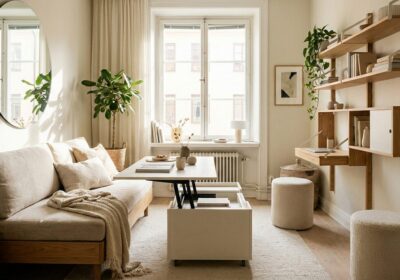
Minimalist decor operates by subtraction — removing everything unnecessary until only the essential and the beautiful remain. A single large-scale artwork on the main wall. One quality throw on the sofa. A sculptural object on the coffee table. A carefully placed plant. The discipline is in what is left out rather than what is included. Every piece must earn its place through either beauty or function, ideally both.
Minimalism is not absence — it is precision. The art should be the best piece you own. The throw should be luxuriously textured. The plant should be healthy and well-positioned. Quality replaces quantity at every decision point.
Maximalist Approach
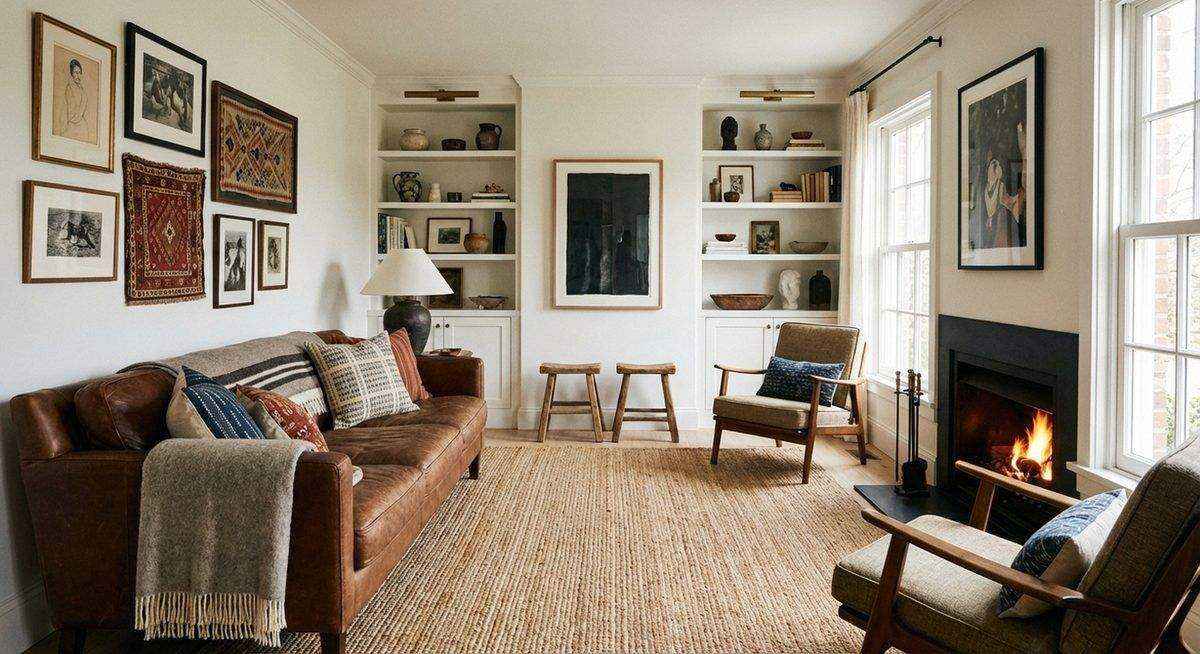
Maximalist decor celebrates abundance, pattern, color, and personality. Gallery walls that cover entire surfaces. Patterned rugs layered over patterned floors. Shelves packed with books, objects, and art. Cushions in contrasting prints. The key to successful maximalism is not randomness but intention — every element is chosen, every combination is considered, and the result is a curated abundance rather than an accidental accumulation.
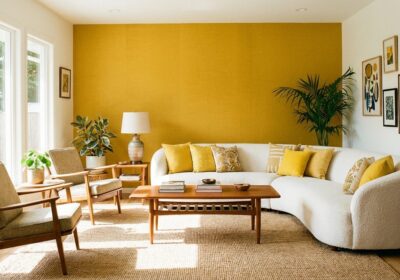
Color cohesion prevents maximalist rooms from feeling chaotic. A shared palette — even a broad one — ties diverse elements together. Warm jewel tones (ruby, amber, emerald, sapphire) create a rich, collected atmosphere. Cool tones (navy, slate, ice blue, silver) produce a more restrained but equally layered effect.
The Gallery Wall
A gallery wall is the living room’s most personal decorative element. Approaches range from uniform grid arrangements (identical frames, equal spacing) to organic salon-style hangs (mixed sizes, asymmetric grouping). Start with the largest piece near the center, then build outward, maintaining consistent spacing between frames. Paper templates taped to the wall before hammering allow arrangement adjustments without unnecessary nail holes.
Textiles as Decor
Throw blankets, cushions, and curtains carry color, pattern, and texture into the room without permanent commitment. The seasonal swap — lighter linens in summer, heavier wools and velvets in winter — keeps the room feeling current and responsive. Three to five cushions on a standard sofa is the sweet spot: enough for visual impact, not so many that sitting requires clearing a path.
Shelf Styling
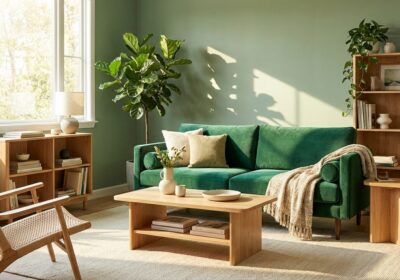
Bookshelves and floating shelves are the living room’s most versatile decor surfaces. The formula: books (horizontal stacks and vertical rows), objects (ceramics, sculptures, found items), greenery (small plants or trailing vines), and framed pieces (photos, small art, postcards). Alternate between heavy and light elements, vary heights, and leave breathing space. A densely packed shelf is a library; a styled shelf is a composition.
The Coffee Table
The coffee table sits at the room’s center and sets its visual tone. A stack of art books (chosen for content, not just spine color), a tray corralling candles and a small plant, and one distinctive object — a sculptural piece, a vintage find, a ceramic bowl — compose a surface arrangement that invites engagement without cluttering functional space. Leave at least 30 percent of the surface clear for actual use.