Charming Girls Bedroom Ideas From Toddler to Teen
Designing a girl’s bedroom presents a particular challenge: creating a space that feels personal and age-appropriate now while possessing the flexibility to evolve as its occupant grows. The rooms that serve longest are those built on neutral foundations with personality expressed through elements that can be updated without renovation.
The Foundation That Lasts
White or soft neutral walls, quality wooden furniture, and durable flooring form a base that serves from toddler years through teenage life. A convertible crib that becomes a toddler bed, then yields to a twin or full-size bed, extends furniture investment across developmental stages. Built-in shelving and a quality desk anticipate the academic demands of school years while serving immediate storage needs.
Ages 3-6: The Whimsical Phase
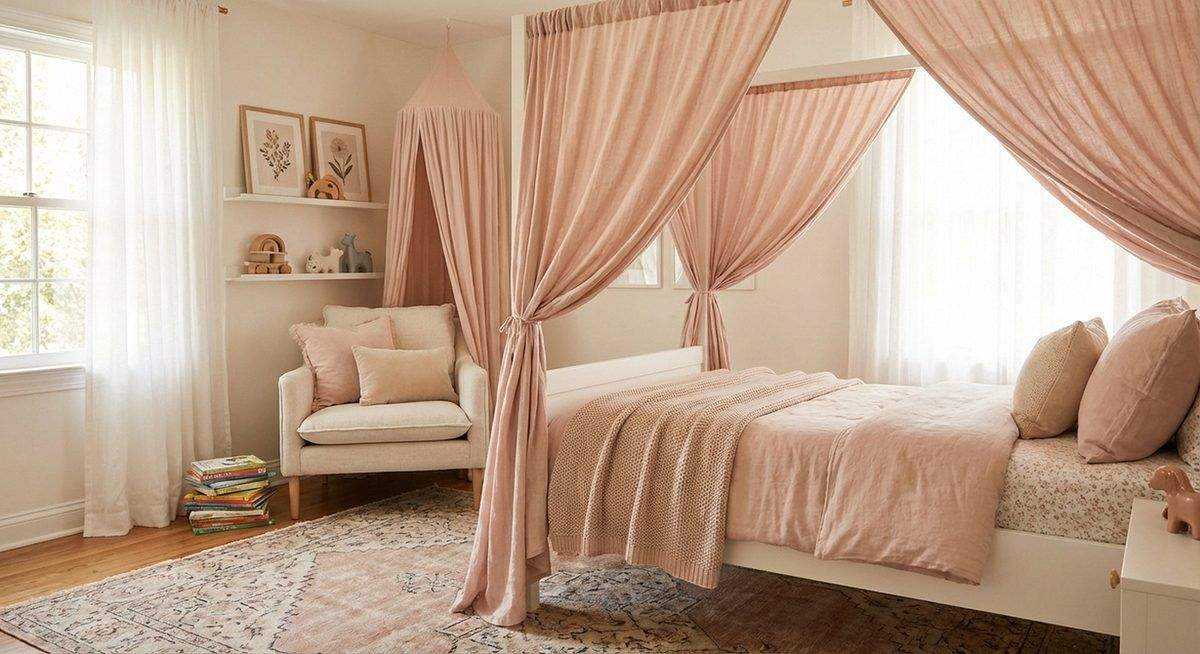
Young children respond to rooms that stimulate imagination. A canopy or tent over the bed creates a fairy-tale sleeping space. Decals on the walls — removable and replaceable — introduce favorite characters, animals, or nature scenes without committing paint to a phase that will pass. Low-mounted hooks and shelves at child height encourage independence in dressing and tidying.
Color at this stage can be bold because the commitment is minimal. Pink, lavender, mint — whatever delights the child — appears in bedding, curtains, and rugs rather than on walls or furniture. The neutral base remains untouched while the accessories celebrate the moment.
Ages 7-11: The Personality Phase
School-age children develop defined interests and opinions about their space. A reading nook — a window seat, a corner bean bag, or a canopy-draped armchair — provides a private retreat for the emerging reader. A craft or hobby area, separate from the desk, supports the creative pursuits that define this developmental stage.
Allow participation in design decisions: choice of bedding pattern, arrangement of a gallery wall, selection of a rug. The room should increasingly reflect the child’s taste rather than the parent’s vision — within the framework of the neutral foundation that continues to serve.
Ages 12-18: The Independence Phase
The teenage years demand a room that functions as a private apartment: sleeping, studying, socializing, and self-expression all within a single space. A full-size bed, a proper desk with task lighting, and a mirror with adequate lighting for grooming become essential. The decor shifts from playful to personal — photographs, collected objects, artwork chosen independently.
Respect privacy in design: a door that locks (or at least closes firmly), storage that conceals personal items, and a layout that does not orient the desk screen toward the door. The room should feel like the teenager’s domain — a place where identity is explored and expressed without constant parental oversight.
Color Strategies That Grow
Dusty rose, soft sage, warm gray, and cream-white form palettes that serve every age. These colors read as sweet in a toddler’s room, fresh in a child’s room, and sophisticated in a teenager’s room — the perception shifts with the accessories surrounding them. Avoid primary colors and cartoon-associated palettes on permanent surfaces; use them in bedding and wall art that can be swapped.
Sources & Further Reading
You May Also Like