The Essential Guide to Bedroom Design Ideas
The bedroom serves one primary function — sleep — and everything within it should support that purpose. This does not mean the room must be austere or purely functional; it means that aesthetics and rest must coexist, with design choices evaluated through the lens of whether they contribute to or detract from the room’s fundamental purpose.
The Bed as Investment
The mattress is the bedroom’s most important purchase and the one most frequently undersized in budgets. A quality mattress — matched to sleeping position, body weight, and temperature preference — affects daily wellbeing more than any other furnishing in the home. The frame should complement the mattress height, provide adequate support, and express the room’s style through its headboard and profile.
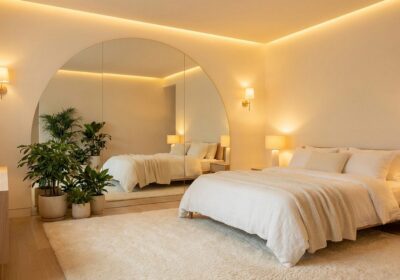
An upholstered headboard adds visual warmth and provides a comfortable surface for sitting up in bed. A wooden headboard adds natural character and tends toward a more traditional aesthetic. A wall-mounted headboard — a panel of fabric, wood, or stone fixed to the wall — creates a clean line that separates the bed structure from the wall treatment.
Color for Rest
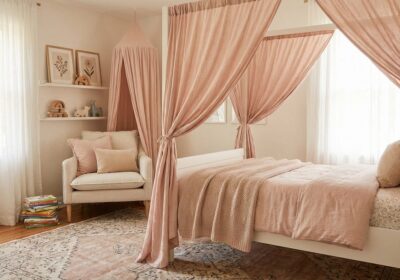
Cool, muted tones — soft blue, sage green, lavender, warm gray — have been associated with better sleep quality in multiple studies. These colors lower visual stimulation and create a calm atmosphere that signals rest. Warm tones — terracotta, blush, cream — create coziness that some sleepers prefer. Bold, saturated colors — bright red, vivid orange, electric blue — are stimulating rather than calming and should be limited to accessories if used at all.
Layered Bedding
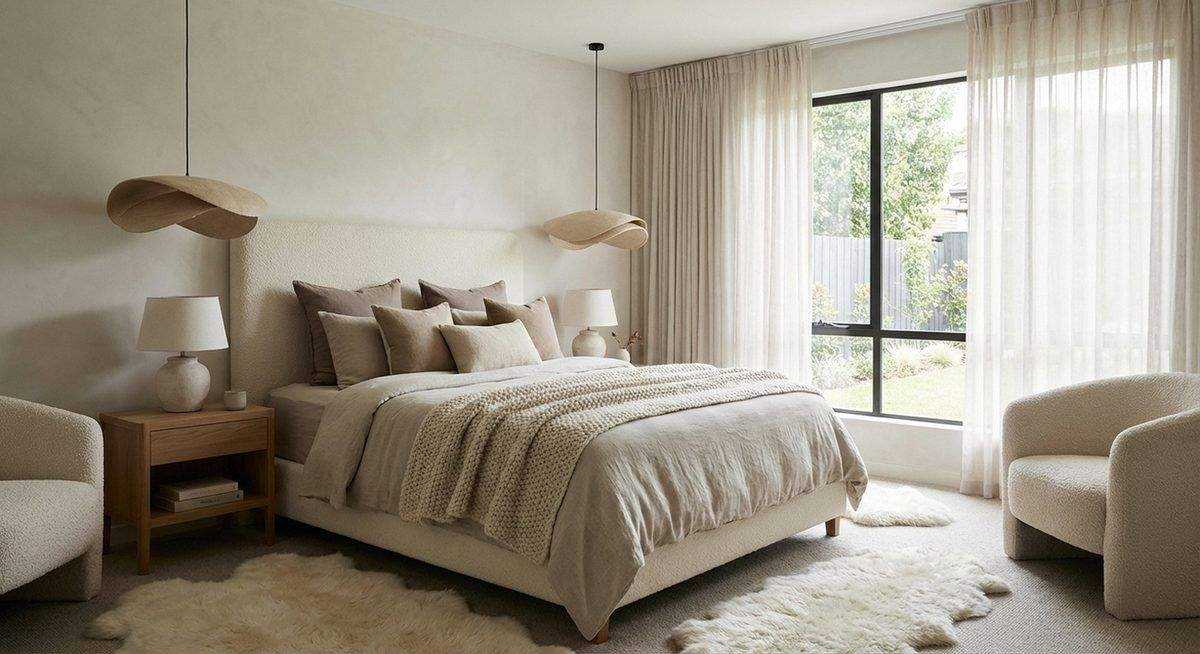
The bed is the room’s largest surface and its most important visual element. Layered bedding — fitted sheet, flat sheet, lightweight blanket, duvet or coverlet, and throw pillows — creates the depth and visual richness that a single duvet cannot achieve. In cooler months, the layers provide adjustable warmth; in warmer months, the duvet can be folded at the foot while the lighter layers remain.
Nightstand Essentials
Each side of the bed needs a surface within arm’s reach: a place for a lamp, a phone, a glass of water, a book. Matching nightstands create symmetry; mismatched ones add character. The nightstand lamp should provide enough light for reading without illuminating the entire room — a directional shade or a dimmable LED accomplishes this without disturbing a sleeping partner.
Storage
Visible clutter in the bedroom interferes with the mental calm required for good sleep. Adequate storage — a dresser, a closet with an organizational system, under-bed drawers — keeps clothing, personal items, and daily accessories out of sight. The bedroom should feel clear and settled at bedtime, not surrounded by the unfinished business of the day.
Window Treatments
Light control is non-negotiable in a bedroom. Blackout curtains or blinds — paired with sheer panels for daytime light diffusion — provide the darkness that promotes deep sleep while allowing natural light during waking hours. The curtain rod should extend 15 to 20 centimeters beyond the window frame on each side, allowing the curtains to stack completely clear of the glass when open.