Windowless Bedroom Ideas That Feel Bright and Airy
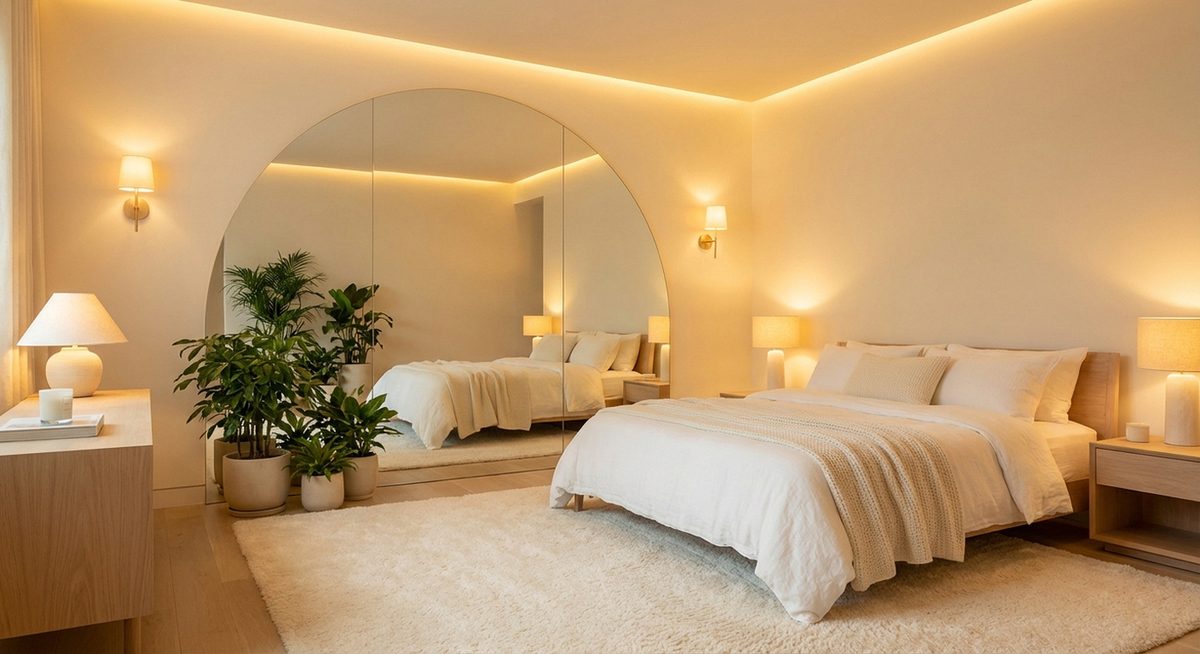
Windowless bedrooms present a genuine design challenge — the absence of natural light and ventilation removes two elements that most bedroom design takes for granted. Yet with deliberate lighting, material choices, and spatial strategies, a room without windows can feel not merely tolerable but genuinely inviting.
Lighting as Architecture
In a windowless room, artificial lighting must perform every function that natural light handles in windowed spaces: general illumination, task lighting, mood setting, and the creation of perceived depth. A single ceiling fixture cannot accomplish this. Layer multiple light sources at different heights and positions.
Recessed lights or a flush-mount fixture provide general illumination. Bedside table lamps create warm pools of task lighting. Wall sconces or picture lights add mid-level ambient glow. LED strip lighting behind a headboard or beneath floating shelves creates a soft backlight that adds dimension without glare. All sources should use warm-toned bulbs (2700K) and dimmable circuits.
The Faux Window
A backlit panel behind a sheer curtain creates a convincing impression of a window — the diffused light and fabric movement suggest an opening that does not exist. Full-spectrum light panels calibrated to mimic daylight provide both the visual warmth and the circadian benefits of natural light. Position the panel at a height consistent with real window placement, and frame it with actual window trim for maximum illusion.
Mirrors and Reflective Surfaces
A large mirror — ideally floor-to-ceiling — on the wall opposite the primary light source doubles the perceived room size and redistributes light throughout the space. Mirrored closet doors or a mirrored headboard wall serve the same function while performing additional practical roles.
Reflective surfaces on furniture — glass nightstand tops, metallic lamp bases, lacquered surfaces — scatter light points across the room, preventing the flat, shadowless quality that makes windowless rooms feel underground.
Color and Material
Light colors reflect more artificial light than dark ones, making them essential in windowless spaces. However, an all-white room without natural light can feel institutional. Introduce warmth through cream, soft blush, pale sage, or light warm gray — colors that feel inviting under artificial illumination. Textured materials — linen, knit throws, woven rugs — absorb sound (critical without window ventilation) and add visual warmth that compensates for the absence of natural light variation.
Ventilation Solutions
Without windows, air quality requires mechanical intervention. A quality air purifier maintains freshness. A ceiling fan with a winter/summer switch provides air circulation. If HVAC ducting reaches the room, ensure the supply and return vents are unobstructed. A door with a bottom gap or a transfer grille allows air exchange with the adjacent hallway.
Embracing the Cave
An alternative approach rejects the attempt to simulate windows and instead embraces the room’s enclosed nature. Dark colors on every surface — deep navy, charcoal, rich plum — create a cocoon effect. Plush bedding, heavy textiles, and warm, low lighting produce a den-like atmosphere optimized for sleep. A windowless bedroom can become the darkest room in the home — which, for sleep quality, may be an advantage rather than a limitation.
Sources & Further Reading
You May Also Like