Small Living Room Ideas That Maximize Every Square Foot
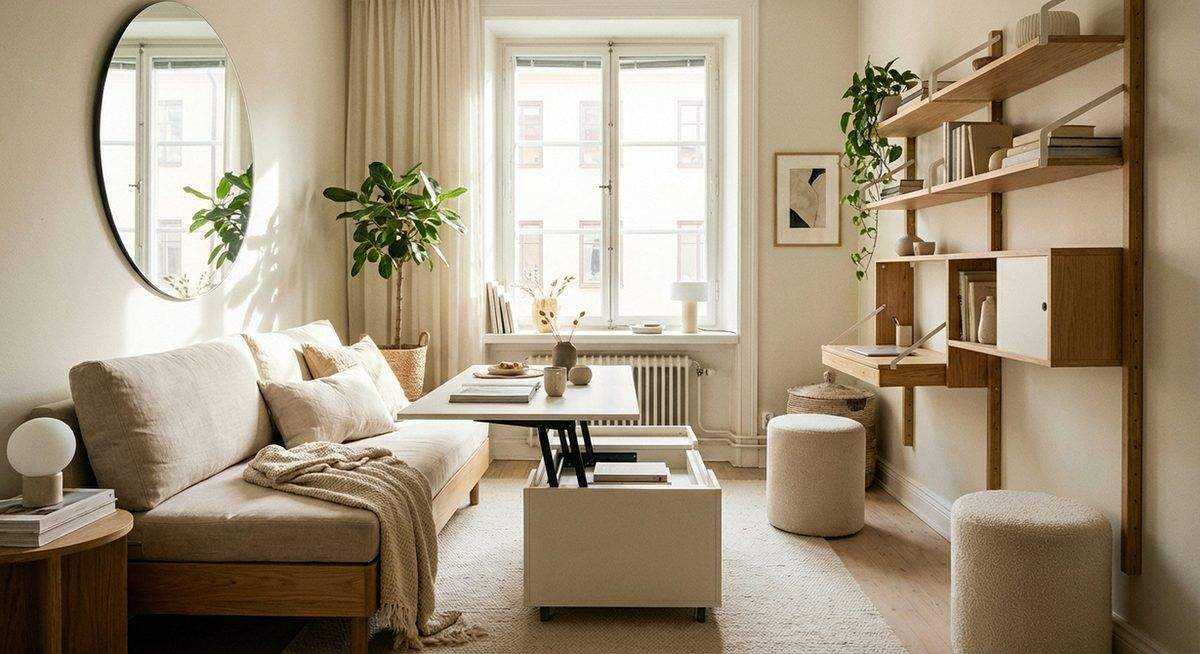
A small living room asks more of its designer than a large one. Every decision carries greater consequence: the wrong sofa overwhelms the space, the wrong color shrinks it, the wrong layout blocks movement. But constraint also clarifies — with limited space, only the essential survives, and what remains is often more considered, more purposeful, and more beautiful than rooms with square footage to spare.
Scale Everything Down — Thoughtfully
Small rooms need small-scale furniture, but “small” should mean compact, not flimsy. An apartment-size sofa (under 180 centimeters wide) provides full seating in a reduced footprint. A slim-profile armchair adds a second seating position without consuming floor space. A nesting table set serves as a coffee table that splits into side tables when guests arrive. Each piece should have a clear purpose and a light visual weight.
Furniture Placement
The instinct to push furniture against walls in small rooms is strong — and often wrong. Pulling a sofa even 15 centimeters from the wall creates a gap that makes both the furniture and the room appear more spacious. A floating layout — where furniture sits within the room rather than hugging its edges — defines a living zone that feels intentional rather than cornered.
Visual Tricks
A large mirror reflecting the window effectively doubles the visual space. Vertical lines — tall bookshelves, floor-to-ceiling curtains, striped wallpaper — draw the eye upward and emphasize ceiling height. Transparent furniture — acrylic coffee tables, glass side tables — provides function without visual bulk. A rug that extends under the front legs of the sofa but not all the way to the walls creates a defined seating area that reads as deliberate.
Storage Solutions
Hidden storage is essential in small living rooms. An ottoman with internal storage replaces both a coffee table and a storage chest. A media console with drawers and cabinets conceals clutter behind closed doors. Floating shelves provide display space without occupying floor area. The goal is containing everything the room needs while maintaining the visual openness that makes small spaces feel livable.
Color and Light
Light colors reflect more light and make rooms feel larger. But an entirely pale room can feel bland — introduce depth through one darker element: a navy accent wall, a deep green sofa, a patterned rug in rich tones. The contrast between light and dark creates visual interest that an all-light palette lacks.
Maximize natural light by keeping window treatments minimal — sheer curtains or simple roller blinds that clear the glass entirely when open. Artificial lighting should come from multiple sources at varied heights rather than a single overhead fixture.
Edit Ruthlessly
In a small living room, every object competes for attention. Limit decorative accessories to a curated few — one statement piece of art rather than a gallery wall, three cushions rather than eight, one well-chosen plant rather than a jungle. The spaces between objects are as important as the objects themselves; in a small room, negative space is a luxury worth preserving.
Sources & Further Reading
You May Also Like