Budget-Friendly DIY Bed Frame Ideas That Look Custom
A bed frame sets the tone for the entire bedroom, yet quality options from retailers routinely command prices that seem disconnected from the materials involved. For anyone comfortable with basic tools and a weekend of focused work, building a bed frame delivers a custom result at a fraction of retail cost — often under $200 in materials.
The Simple Platform
The most approachable DIY bed frame is a low platform: a rectangular frame of dimensional lumber topped with closely spaced slats. Two-by-six lumber for the perimeter, two-by-four crossbeams, and one-by-four slats produce a solid, quiet frame that requires no box spring. The platform sits close to the floor, creating a modern, minimalist profile that suits contemporary and Scandinavian-inspired bedrooms.
Cut all lumber to length, assemble the perimeter with wood screws, install crossbeams at 40-centimeter intervals, and lay slats across the top with small gaps for mattress ventilation. Sand all surfaces, round the edges, and finish with the stain or paint of your choice. Total build time: four to six hours.
Hairpin Leg Elevated Platform
The same platform construction elevated on steel hairpin legs — available inexpensively online — creates a mid-century modern aesthetic with under-bed storage space. Sixteen-inch hairpin legs raise the frame enough for storage bins while keeping the overall height comfortable for sitting on the mattress edge. The contrast between industrial steel legs and warm wood reads as intentionally designed rather than improvised.
Reclaimed Wood Headboard Frame
Pairing a simple platform base with a headboard constructed from reclaimed barn wood or fence boards creates visual warmth and character. Mount the boards horizontally to a plywood backing, varying widths and tones for a textured effect. The headboard attaches to the wall rather than the frame, allowing easy height adjustment and eliminating the need for a structural connection between headboard and base.
Plywood Minimalist Frame
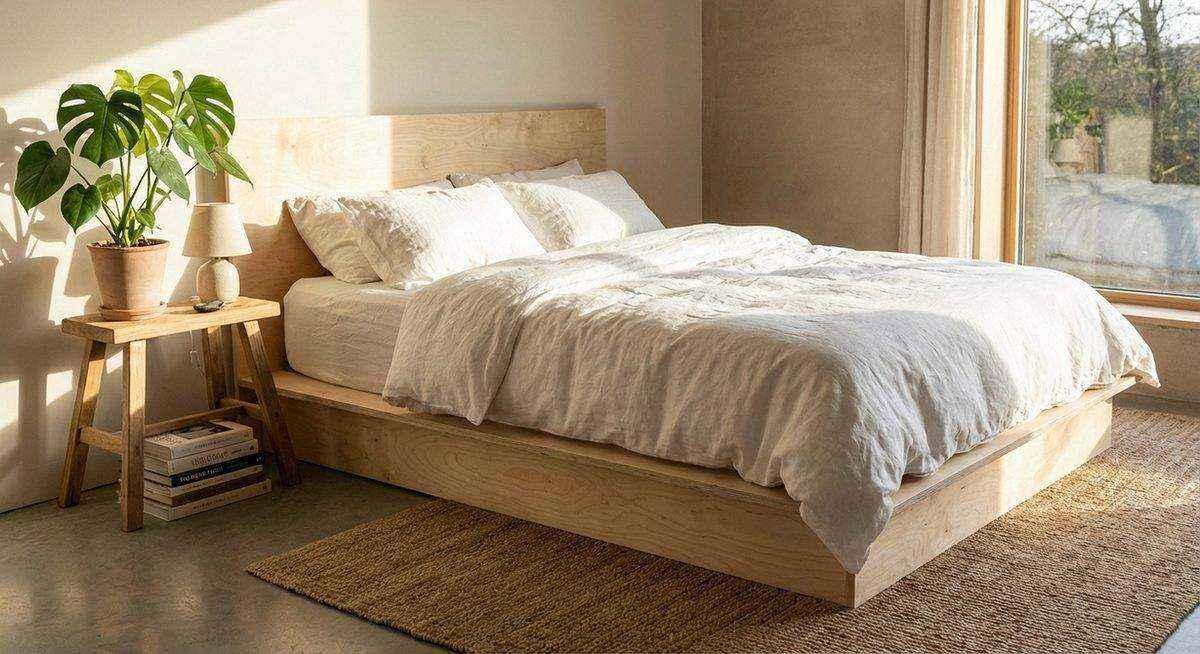
A single sheet of high-quality plywood — Baltic birch or maple veneer — cut to mattress dimensions and supported on a low frame of two-by-fours creates an ultramodern platform with a distinctive visible edge. The layered plywood edge becomes a design feature, especially when finished with a clear sealant that showcases the laminated grain. This is the frame for those who appreciate materials-driven design.
Cinder Block and Timber
For the most budget-conscious approach, concrete cinder blocks stacked two high at the corners and midpoints, with timber beams spanning between them, create a surprisingly stable and visually interesting frame. The industrial look suits loft-style interiors. Paint the blocks in matte black or charcoal to elevate the appearance, and add felt pads beneath to protect flooring.
Floating Bed Frame
The floating bed creates the illusion that the mattress hovers above the floor. The trick is a recessed base — a smaller inner frame that sits well within the mattress perimeter, hidden from view. LED strip lighting beneath the platform enhances the effect, casting a soft glow that makes the bed appear genuinely levitated. This frame requires the most precise construction but produces the most dramatic result.
Finishing and Maintenance
Regardless of design, sand all surfaces to at least 220 grit before finishing. For natural wood tones, a clear matte polyurethane protects against wear while preserving the wood’s character. For colored finishes, a quality primer followed by two coats of furniture-grade paint produces results indistinguishable from factory pieces. Tighten all connections after the first month of use, as wood settles and joints may loosen slightly under repeated loading.
Sources & Further Reading
You May Also Like