Gothic Style in Interior Design: Drama and Elegance
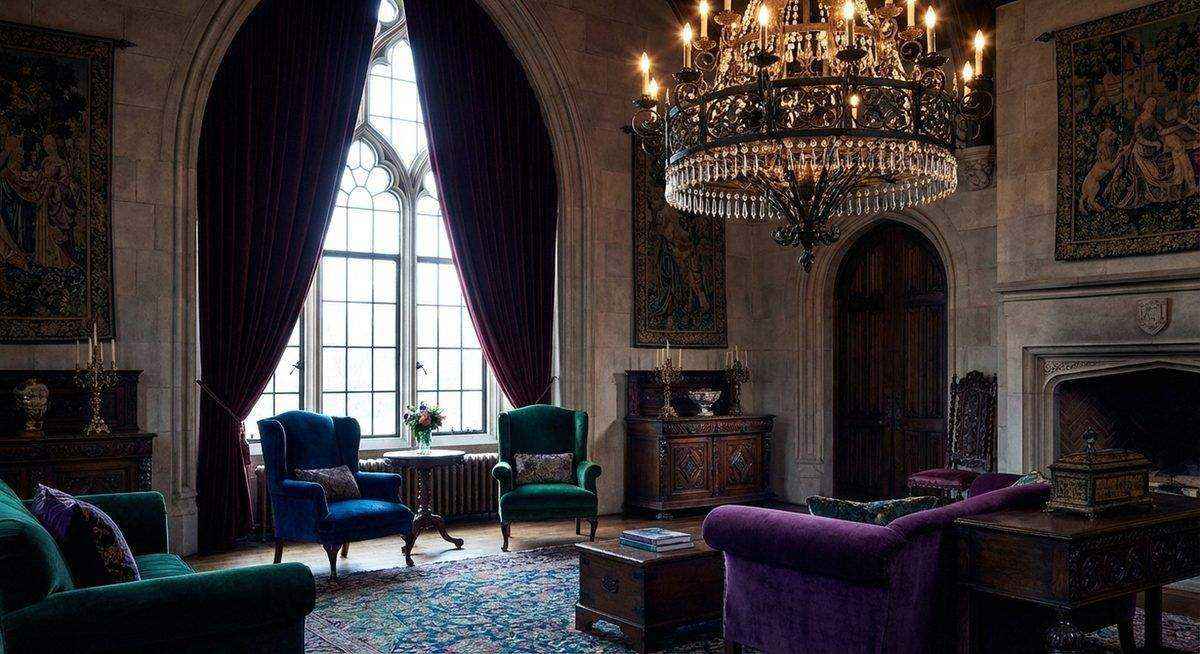
Gothic style in interior design draws from the architectural vocabulary of medieval cathedrals — pointed arches, ribbed vaults, elaborate tracery — and translates it into domestic spaces that feel dramatic, mysterious, and deeply atmospheric. Far from the macabre stereotypes that popular culture sometimes attaches to the term, Gothic interiors at their best achieve a sophisticated darkness that is more cathedral than haunted house.
Historical Roots
The Gothic architectural style emerged in 12th-century France, reaching its full expression in the great cathedrals of the 13th and 14th centuries. The style’s defining innovation — the pointed arch and flying buttress — allowed walls to be opened with vast windows, flooding interiors with colored light. The Gothic Revival of the 19th century brought these forms into residential architecture, and designers like Augustus Pugin and William Morris translated the medieval aesthetic into furniture, textiles, and decorative objects.
Key Elements
Pointed Arches
The pointed or ogive arch is Gothic design’s most recognizable motif. In contemporary interiors, it appears in mirrors, doorway treatments, window frames, and furniture silhouettes. A single Gothic-arched mirror on an otherwise plain wall introduces the style without period-reproduction excess.
Dark Color Palette
Deep colors form the foundation: midnight blue, forest green, oxblood red, charcoal, and matte black. These are not bleak colors — they are rich, saturated hues that absorb light and create enveloping, intimate atmospheres. Against these dark grounds, metallic accents in aged brass, wrought iron, and tarnished silver read with particular clarity.
Rich Textiles
Velvet is the quintessential Gothic fabric — its light-absorbing surface and tactile depth embody the style’s preference for sensory richness. Heavy brocades, tapestries, and damasks add pattern and texture. Layered window treatments — sheers beneath heavy drapes — control light with theatrical precision, moving from filtered daylight to complete darkness.
Ornamental Ironwork
Wrought iron chandeliers, candelabras, curtain rods, and decorative hardware reference the metalwork of medieval buildings. The handcrafted quality of ironwork — visible hammer marks, organic curves, deliberate imperfections — grounds the style in material authenticity that cast reproductions cannot replicate.
Modern Interpretation
Contemporary Gothic interiors edit the style’s historical excess, extracting its atmospheric qualities while maintaining livability. A single deep-colored room — a study, bedroom, or dining room — creates a Gothic moment within an otherwise neutral home. Statement pieces like a carved oak bookcase, a wrought-iron four-poster bed, or a pair of cathedral-window mirrors introduce the style’s drama without committing every surface to darkness.
The mood is the goal: a sense of depth, mystery, and enclosure that makes the room feel like a retreat from the ordinary. Candlelight — or candlelight-toned LED alternatives — is essential. Gothic interiors are designed for evening, for reading, for intimate conversation, and for the particular quality of beauty that only emerges when light becomes a scarce and valued resource.