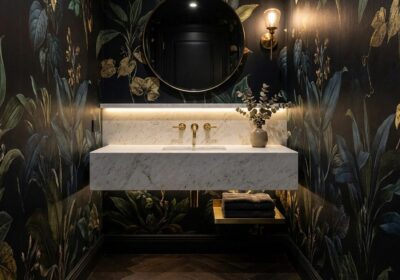
Timeless Black and White Bathroom Design Ideas
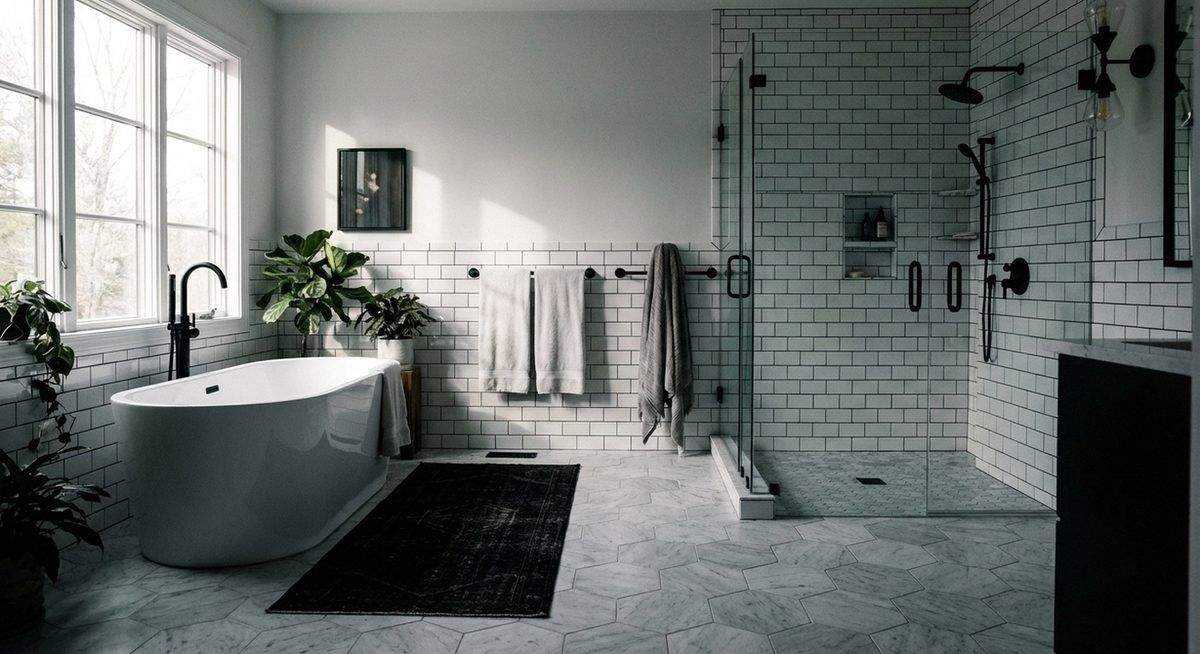
The black and white bathroom endures because it operates outside of trends. While color palettes rise and fall with the seasons, monochrome persists — as relevant in a 2025 renovation as it was in a 1925 penthouse. The combination’s power lies in its inherent contrast: every design decision is amplified when only two values are in play.
Proportion: How Much Black, How Much White
The balance between black and white determines the room’s character entirely. A predominantly white bathroom with black accents feels clean, open, and classic — the standard approach for smaller bathrooms where light reflection matters. A predominantly black bathroom with white elements feels dramatic, intimate, and luxurious — a bold choice suited to powder rooms and primary bathrooms with generous dimensions.
The 70/30 ratio serves as a reliable starting point: 70 percent white (walls, ceiling, major surfaces) and 30 percent black (floor, fixtures, accents). Reversing the ratio — 70 percent black, 30 percent white — creates a moodier, more enveloping space that reads as sophisticated rather than severe.
Materials and Pattern
In a two-color scheme, pattern becomes the primary source of visual interest. Classic options include black and white floor tiles in checkerboard, hexagonal, or herringbone patterns. Marble with natural dark veining introduces organic movement that softens the graphic contrast. Penny rounds, basket weave, and encaustic cement tiles each offer distinct pattern languages within the monochrome constraint.
Mixing tile formats — large-format white wall tiles with small-format black floor tiles, or subway tiles with mosaic accents — creates textural layering that compensates for the absence of color variety.
Fixtures and Hardware
Matte black fixtures — faucets, showerheads, towel bars, and cabinet pulls — have become a defining element of contemporary black and white bathrooms. The matte finish absorbs light rather than reflecting it, providing a softer contrast against white surfaces than polished chrome. For a warmer take, brushed brass or aged bronze hardware introduces a neutral metallic that reads as neither black nor white but complements both.
The Freestanding Tub
A white freestanding bathtub against a dark wall or floor creates one of the most striking compositions available in bathroom design. The sculptural form of the tub — whether slipper, oval, or rectangular — reads with maximum clarity against its contrasting background. Black exterior tubs with white interiors push the drama further, creating a piece of furniture-grade visual impact.
Softening Strategies
Pure black and white can feel severe. Introducing texture — woven baskets, wooden bath accessories, fluffy white towels, a potted plant — adds warmth without introducing color. A natural wood vanity or mirror frame provides a warm neutral that mediates between the extremes. Frosted or textured glass, rather than clear, diffuses light and adds softness to an otherwise sharp-edged palette.
Lighting matters enormously in monochrome bathrooms. Warm-toned lighting (2700K to 3000K) prevents white surfaces from appearing clinical and gives black surfaces depth rather than flatness. Layered lighting — ambient, task, and accent — creates dimension that a single overhead fixture cannot achieve.
Sources & Further Reading
You May Also Like