15 IKEA Furniture Hacks That Look Expensive
IKEA furniture is engineered for affordability, flat-pack shipping, and democratic design. What it lacks — the material warmth of solid wood, the individuality of handcrafted hardware, the sense that a piece was chosen rather than merely purchased — can be added with surprisingly modest effort. These fifteen modifications bridge the gap between mass-market pricing and custom appearance.
1. Hardware Swap
Replacing IKEA’s standard handles and knobs with aftermarket hardware is the highest-impact, lowest-effort upgrade available. Leather pulls on a KALLAX unit, brass cup handles on a HEMNES dresser, or matte black T-bars on a BESTA media console — each swap takes minutes and costs under $50 for a full set. The hardware becomes the signature detail that distinguishes the piece.
2. Legs Upgrade
Replacing IKEA’s plastic adjustable feet with tapered mid-century legs, hairpin legs, or turned wooden legs transforms the silhouette of any floor-standing unit. Companies specializing in aftermarket furniture legs offer mounting plates compatible with IKEA’s standard hardware points.
3. Contact Paper or Peel-and-Stick Wallpaper
Applying patterned or textured contact paper to the sides, top, or interior back panels of IKEA shelving and cabinets introduces visual interest that plain melamine cannot achieve. Marble-effect, wood grain, or geometric patterns on a KALLAX interior back panel create a custom look visible when items are arranged with intentional spacing.
4. Paint and Primer
IKEA’s laminate surfaces accept paint well when properly primed with a bonding primer. A coat of high-quality furniture paint — chalk paint, milk paint, or cabinet-grade enamel — transforms the surface from anonymous to intentional. Two-tone treatments (body in one color, drawers in another) add sophistication that reads as custom design.
5. Wood Top Upgrade
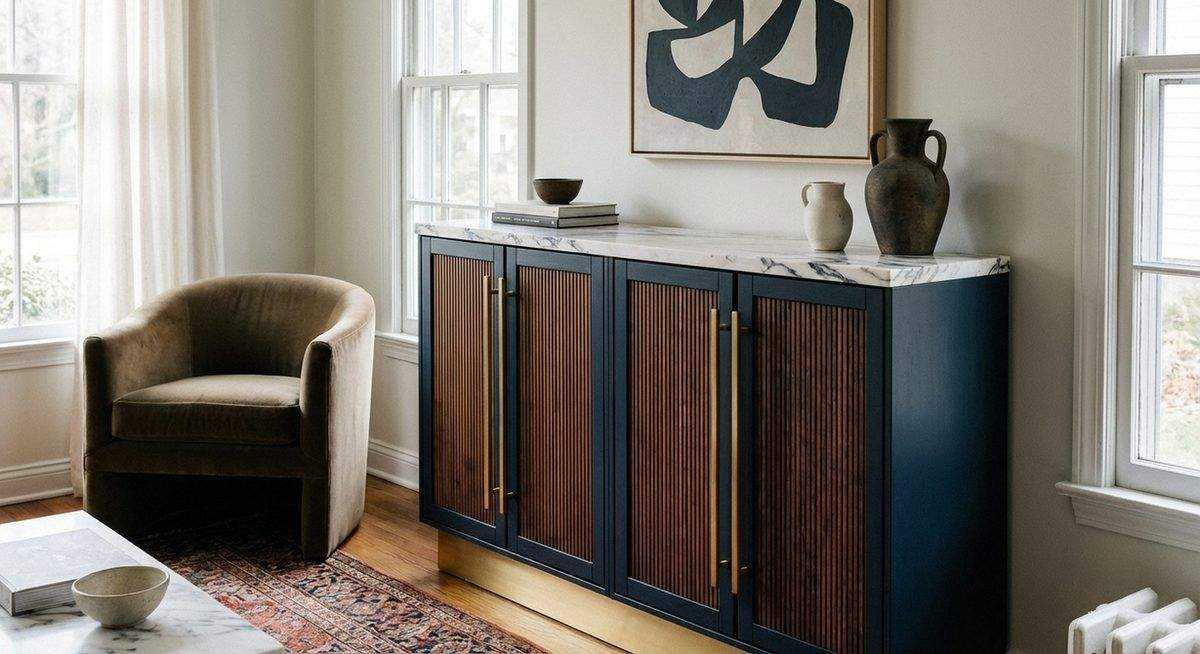
Replacing the top surface of an IKEA dresser, console, or sideboard with a solid wood, butcher block, or marble slab immediately elevates the piece. The contrast between the clean lines of the IKEA base and the natural character of real wood creates a hybrid that combines affordability with material quality.
6. KALLAX as Built-In
Mounting multiple KALLAX units side by side and surrounding them with trim and crown molding creates a built-in bookcase effect at a fraction of custom cabinetry cost. Paint the units and trim the same color as the wall for seamless integration, or use a contrasting color for a furniture-like presence.
7. Door Panels
Adding thin wood panels, cane webbing, or fabric-covered inserts to the flat doors of IKEA cabinets introduces texture and dimension. Rattan cane applied to BESTA doors creates a coastal or bohemian aesthetic. Fluted wood molding strips applied vertically produce an Art Deco-influenced surface.
8. MALM Dresser Refinement
The ubiquitous MALM dresser accepts upgrades gracefully: an overlay of thin molding to create Shaker-style drawer fronts, a marble or wood top, and swapped hardware. These three changes — each taking under an hour — make the world’s most common dresser unrecognizable as an IKEA product.
9. TARVA Bed Stain
The raw pine TARVA bed frame, IKEA’s most hackable product, accepts any stain or paint finish. Dark walnut stain creates a sophisticated, warm-toned frame. Whitewash produces a coastal or Scandinavian effect. The solid wood construction responds to finishing treatments that IKEA’s laminate products cannot.
10. Floating Credenza
Wall-mounting a BESTA unit at mid-height — eliminating the legs entirely — creates a floating credenza with a clean, contemporary profile. The space beneath is easy to clean and visually lightens the piece. Add a contrasting wood top and upgraded hardware for a result that rivals designer furniture.
11. Fabric Insert Headboard
Upholstering a flat IKEA headboard — or building one from an IVAR shelf panel — with foam padding and quality fabric creates a custom headboard for under $100. Channel tufting, achieved by sewing through the padding at regular intervals, adds the tailored detail that elevates the piece from DIY to design.
12. LACK Table Stack
Stacking two LACK side tables and connecting them with wood glue and screws creates a two-tier end table with shelf storage. Paint both pieces the same color for a cohesive unit that appears intentionally designed rather than improvised.
13. Kitchen Island
Two KALLAX 2×2 units placed back-to-back, topped with a butcher block countertop, and mounted on locking casters create a mobile kitchen island with 16 storage cubes. The island provides prep surface, storage, and visual separation between kitchen and dining zones.
14. IVAR Cabinet Doors
The raw pine IVAR system accepts any door treatment — cane panels, painted plywood, perforated metal, fabric-covered frames. Building custom doors for the IVAR frame creates a storage system that combines IKEA’s modular flexibility with handcrafted individuality.
15. Combined Unit Bench
A STUVA bench or low BESTA unit topped with a custom cushion and positioned in an entryway becomes a built-in bench with concealed shoe and accessory storage. Add hooks on the wall above and a floating shelf for keys and mail, and the IKEA base becomes the anchor of a complete entryway system.
Sources & Further Reading
You May Also Like