The Art of Using Stripes in Interior Design
Stripes are among the oldest and most versatile patterns in interior design — equally at home in a formal dining room, a coastal bedroom, and a bohemian living space. Their power lies in directionality: stripes guide the eye, manipulate proportion, and create rhythm on any surface to which they are applied.
Horizontal Stripes
Horizontal stripes widen. Applied to walls, they make narrow rooms feel broader. On upholstery, they visually expand the piece. The effect is strongest with high-contrast color pairs (navy and white, black and cream) and diminishes with lower contrast (tone-on-tone stripes in similar values). Wide horizontal stripes (15 centimeters or more) create bold, contemporary statements. Narrow stripes (under 5 centimeters) produce a more refined, traditional effect.
Vertical Stripes
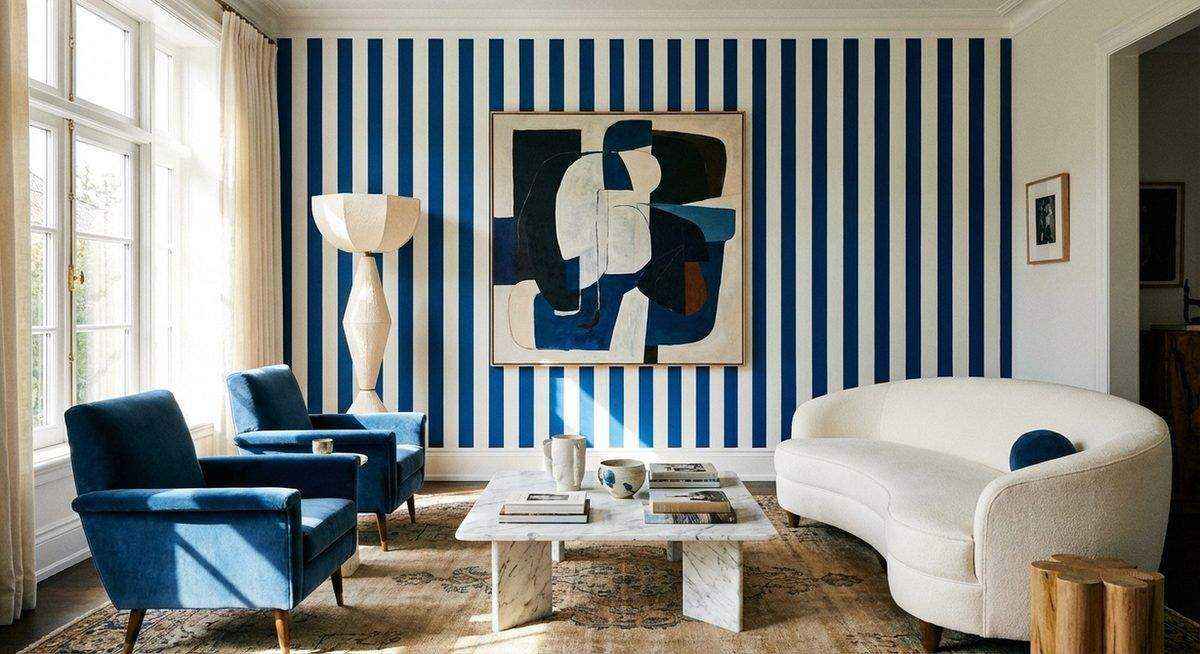
Vertical stripes heighten. On walls, they draw the eye upward and make ceilings appear taller. In drapery, they add formality and visual length. Pinstripes — very narrow vertical lines on a solid ground — add texture without asserting pattern, making them suitable for spaces where bold stripes might overwhelm.
Mixing Stripe Scales
Combining stripes of different widths — a wide-striped rug with narrow-striped cushions, for instance — creates layered visual interest without pattern conflict. The key is maintaining a shared color palette across the different stripe scales. Two striped elements in the same room work when they share colors; they clash when the colors diverge.
Stripes and Solids
The most successful striped interiors balance the pattern with solid-color surfaces. A striped accent wall paired with solid-color furnishings allows the stripes to command attention without competition. A striped sofa in an otherwise pattern-free room becomes a bold focal point. The ratio of striped to solid surfaces should generally favor solids — stripes are most effective when they have visual breathing room.
Materials and Applications
Painted wall stripes — achieved with careful taping and two paint colors — create architectural-scale pattern without wallpaper’s commitment. Striped area rugs ground furniture groupings and define zones within open-plan spaces. Striped textiles — curtains, cushions, upholstery — introduce pattern at a scale that is easily updated.
Ticking stripe fabric — the narrow, even stripe originally used for mattress covers — carries a casual, classic quality that works in virtually any setting. Available in dozens of color combinations, ticking stripe is one of the most reliable pattern choices for anyone uncertain about incorporating stripes for the first time.
When to Exercise Restraint
Stripes on every surface create visual vibration that most occupants find fatiguing. The pattern is strong medicine — effective in measured doses, overwhelming in excess. One major striped element per room is generally sufficient. If the walls are striped, keep the furnishings solid. If the rug is boldly striped, let the walls rest. The stripe should be the room’s heartbeat, not its entire nervous system.