How to Create a Warm and Inviting Living Room
Warmth in interior design is not about temperature — it is about atmosphere. A room can be well-heated yet feel cold: hard surfaces, cool-toned lighting, and sparse furnishing create an environment that registers as unwelcoming regardless of the thermostat reading. True warmth is a sensory quality built through material, color, light, and proportion.
Color as Foundation
Warm colors — terracotta, amber, soft rust, caramel, deep cream — create an immediate sense of comfort. These hues reference natural warmth: firelight, autumn leaves, sun-baked earth. A warm-toned wall color does more to shift a room’s atmosphere than any single piece of furniture.
This does not require bold color. Even within a neutral palette, choosing warm neutrals — creamy whites instead of blue-whites, greige instead of cool gray, sand instead of silver — establishes a foundational warmth that supports every subsequent design decision.
Layered Textiles
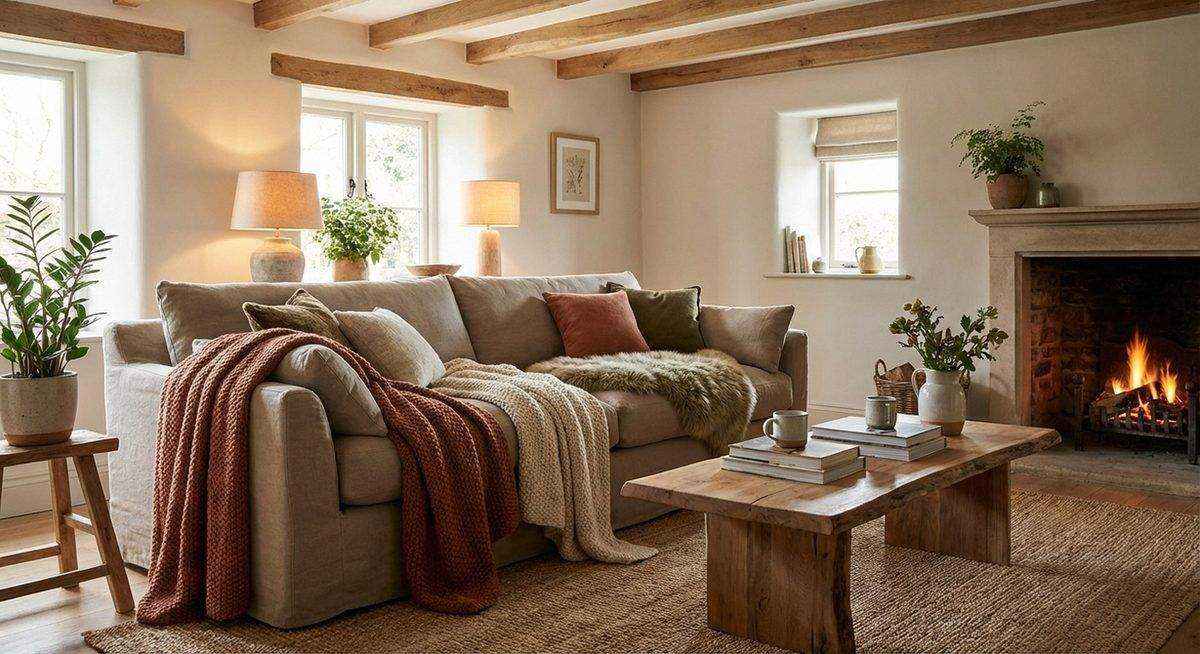
Soft surfaces absorb sound and light, creating the acoustic and visual softness that defines cozy spaces. Layer a living room with a plush area rug over hard flooring, upholstered seating in tactile fabrics like velvet or bouclé, throw blankets draped across chair arms, and cushions in varying textures — linen, knit, faux fur.
The key is variety of texture rather than quantity. Three different textures create interest; ten create visual chaos. A wool rug, a velvet sofa, and linen cushions provide sufficient textural range without competing for attention.
Ambient Lighting
Overhead lighting — particularly the recessed downlight — is the enemy of warmth. It casts harsh shadows, flattens surfaces, and creates the atmosphere of a commercial space rather than a home. Warm living rooms rely on multiple light sources at lower levels: table lamps, floor lamps, sconces, and candles.
Position light sources at seated eye level or below. Warm-toned bulbs (2700K or lower) produce the amber glow that our eyes associate with comfort and relaxation. Dimmers on every light source allow the room’s mood to shift from functional brightness during the day to intimate softness in the evening.
Natural Materials
Wood, leather, stone, wool, cotton, linen, rattan — natural materials carry an inherent warmth that manufactured alternatives struggle to replicate. A solid wood coffee table, a leather accent chair, a stone fireplace surround, and a woven basket holding throw blankets introduce organic character that feels grounded and timeless.
The visual warmth of natural materials increases with age and use. Leather develops a patina, wood deepens in tone, and stone reveals its character through years of touch and light. These materials reward time, creating rooms that grow warmer with each passing season.
Furniture Arrangement
Warm rooms bring people together rather than spacing them apart. Arrange seating in a conversational grouping — pieces angled toward each other rather than lined against walls. A sofa and two chairs arranged around a coffee table, with no more than 2.5 meters between the farthest seats, creates an intimate circle that encourages connection.
Furniture placed against the walls leaves a void in the center of the room that feels both empty and cold. Pulling seating away from walls and clustering it around a focal point — fireplace, coffee table, window view — fills the room’s heart with activity and presence.
Personal Touches
Books stacked on a coffee table, photographs in simple frames, a collection of ceramics on a shelf, fresh flowers or a potted plant — these are the details that distinguish a warm living room from a showroom. They signal habitation, personal history, and care. A room that looks as though someone lives in it, thinks about it, and returns to it gladly is, by definition, a warm room.
Sources & Further Reading
You May Also Like