Hi-Tech Kitchen Design: Technology Meets Style
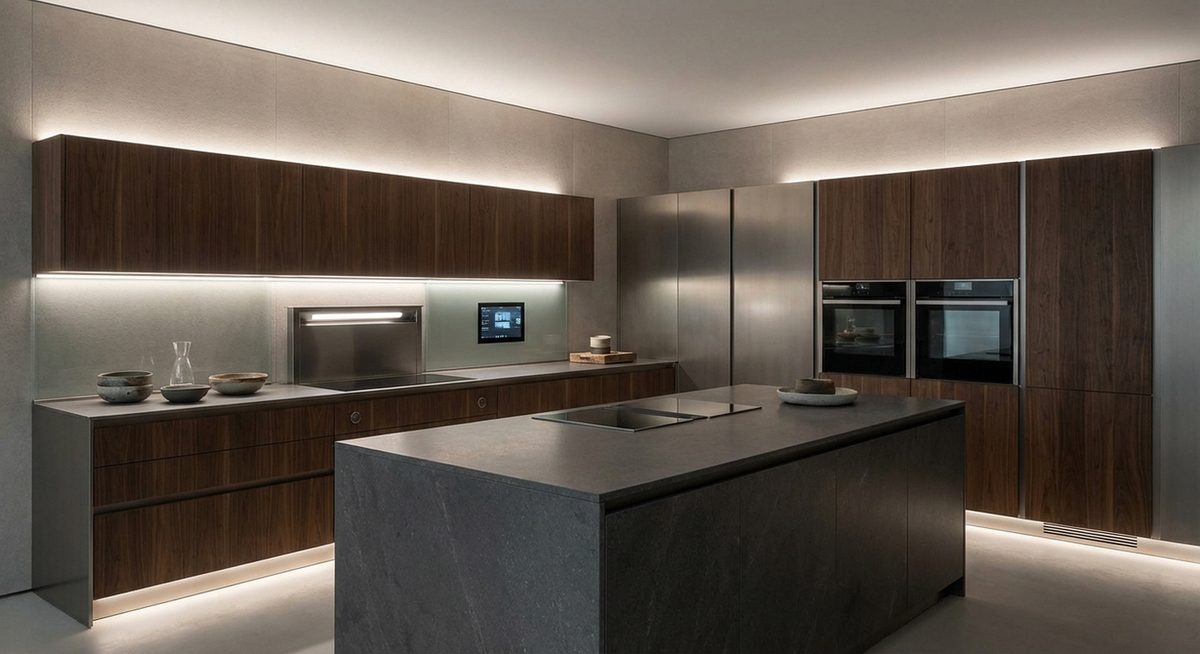
The hi-tech kitchen succeeds when technology disappears into the design — when smart systems enhance the cooking experience without announcing their presence through visible screens, blinking indicators, and cable clutter. The best technology-forward kitchens look simpler than conventional ones, not more complex.
Integrated Appliances
Panel-ready refrigerators, dishwashers, and freezers accept custom cabinet fronts that render them invisible within the cabinetry run. The result is a kitchen that presents as a seamless wall of material — wood, lacquer, or stone — with no stainless steel interruptions. Ovens and microwaves recessed into tall cabinets at ergonomic heights maintain the clean plane.
Smart Surfaces
Induction cooktops integrated flush with the countertop create a continuous surface that functions as both cooking area and prep space when the burners are off. The most advanced versions feature entire counter zones that detect cookware placement and heat only the area beneath the pot — eliminating the traditional burner layout entirely.
Countertops with integrated wireless charging zones power devices without visible cables. Under-counter lighting activated by motion sensors illuminates work surfaces automatically when hands approach.
Connected Systems
Smart ovens that adjust temperature and timing based on the food being cooked, refrigerators that track inventory and suggest recipes, and ventilation hoods that activate automatically when cooking begins — these connected systems reduce the cognitive load of cooking. Voice-controlled assistants integrated into kitchen speakers manage timers, play music, and answer measurement conversion questions hands-free.
Water Systems
Instant hot water taps eliminate the kettle from the counter. Filtered water dispensers built into the primary faucet remove the need for pitcher filters and bottled water. Touchless faucets activated by hand proximity maintain hygiene during food preparation when hands are frequently contaminated.
Storage Technology
Motorized cabinet shelves that lower from upper cabinet heights to counter level make high storage accessible without step stools. Pull-out pantry systems that bring deep storage into full view eliminate the lost items that accumulate in conventional deep cabinets. Drawer refrigeration and freezer drawers positioned at point-of-use reduce trips to the main unit during meal preparation.
The Human Element
Technology in the kitchen should serve the cook, not impress the visitor. The most effective tech integrations are those the user stops noticing after the first week — the faucet that turns on when approached, the light that brightens when chopping begins, the oven that preheats itself. These are not features to demonstrate; they are refinements that make the daily act of cooking more fluid, more intuitive, and more enjoyable.