How to Integrate a Wardrobe Into Your Bedroom Design
The wardrobe presents one of bedroom design’s fundamental tensions: the need for generous clothing storage competing directly with the desire for a serene, uncluttered sleeping environment. Resolving this tension requires more than simply choosing a cabinet — it demands a holistic approach to layout, proportion, and visual weight.
Built-In vs. Freestanding
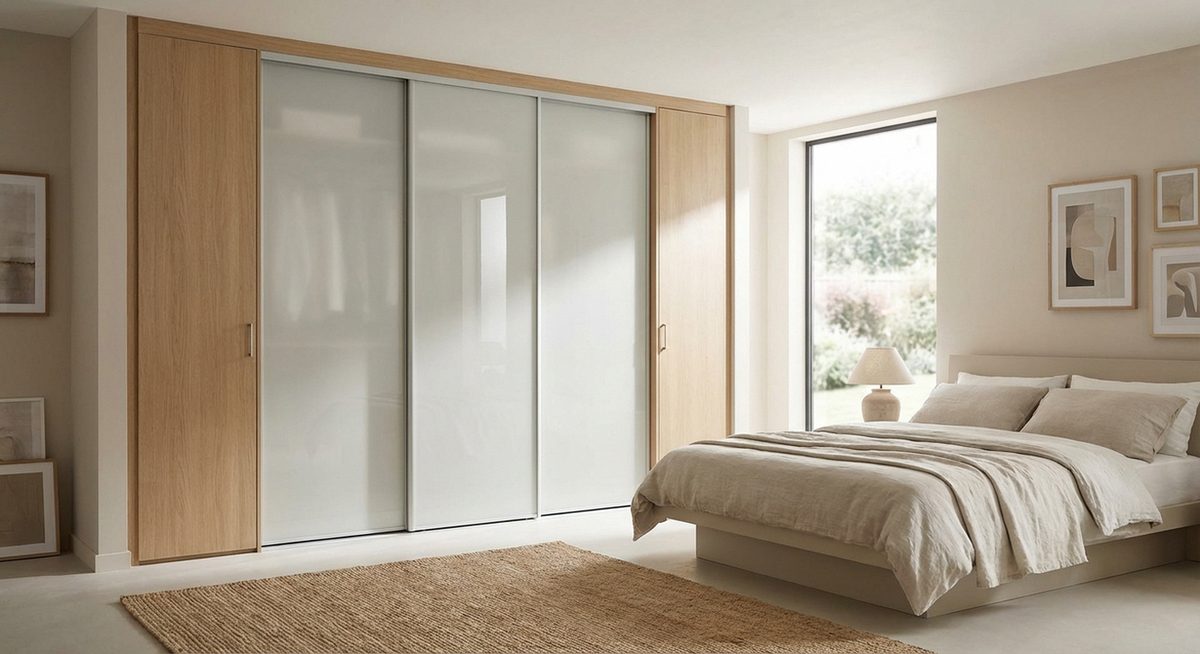
Built-in wardrobes integrate seamlessly with the room’s architecture, creating a wall of storage that reads as part of the structure rather than an addition to it. Floor-to-ceiling installations maximize vertical space and eliminate the dust-collecting gap above freestanding units. When finished with the same paint or wall treatment as the surrounding surfaces, built-ins virtually disappear.
Freestanding wardrobes, by contrast, bring character and flexibility. A well-chosen armoire or wardrobe becomes a statement piece — particularly in period-style interiors where fitted furniture feels anachronistic. The trade-off is a larger visual footprint and less efficient use of wall space.
Sliding Doors for Tight Spaces
In bedrooms where floor space is limited, sliding wardrobe doors eliminate the clearance zone required by hinged doors. This single change can recover up to a square meter of usable floor area — space that might accommodate a bedside table, reading chair, or simply breathing room around the bed.
Mirrored sliding panels serve double duty, reflecting light and visually expanding the room. For a softer effect, frosted glass or fabric-paneled doors filter the wardrobe contents from view without the high-contrast reflection of full mirrors.
Strategic Placement
The wall opposite the bed is the natural location for a wardrobe, but not always the optimal one. Consider placing storage along the wall adjacent to the bedroom door — this positions the wardrobe behind the sightline as one enters, preserving the bed as the room’s focal point.
In narrow rooms, a wardrobe flanking the bed head creates an alcove effect, with the bed nestled between two storage columns. This arrangement adds architectural depth and provides convenient bedside shelving without separate nightstands.
Interior Organization
The interior layout of a wardrobe matters as much as its exterior. A well-organized system includes hanging space at two heights — full-length for dresses and coats, half-height doubled up for shirts and folded trousers. Dedicated drawer inserts for accessories, a shelf for handbags, and a pull-out rack for shoes transform a simple cabinet into a functional dressing system.
Lighting inside the wardrobe elevates both function and perception. LED strip lighting activated by door sensors illuminates contents without fumbling and gives the interior a boutique-quality presentation.
Visual Integration
Color matching is the simplest path to visual integration. A wardrobe painted in the room’s dominant wall color recedes; one finished in a contrasting tone advances and becomes a feature. Handle-free push-to-open mechanisms create the cleanest lines, while statement hardware — leather pulls, brass knobs — adds tactile personality.
The goal, regardless of style, is a wardrobe that feels like it belongs. A bedroom should never look like a storage problem was solved — it should look like every element, including the wardrobe, was part of the original vision.
Sources & Further Reading
You May Also Like