Creative Tree Stump Ideas for Your Garden Landscape
Few garden features carry as much untapped potential as the humble tree stump. Where most homeowners see an obstruction worthy of grinding, seasoned landscapers recognize a canvas for creativity — one that adds vertical interest, natural texture, and an element of surprise to outdoor spaces.
Natural Planters and Flower Displays
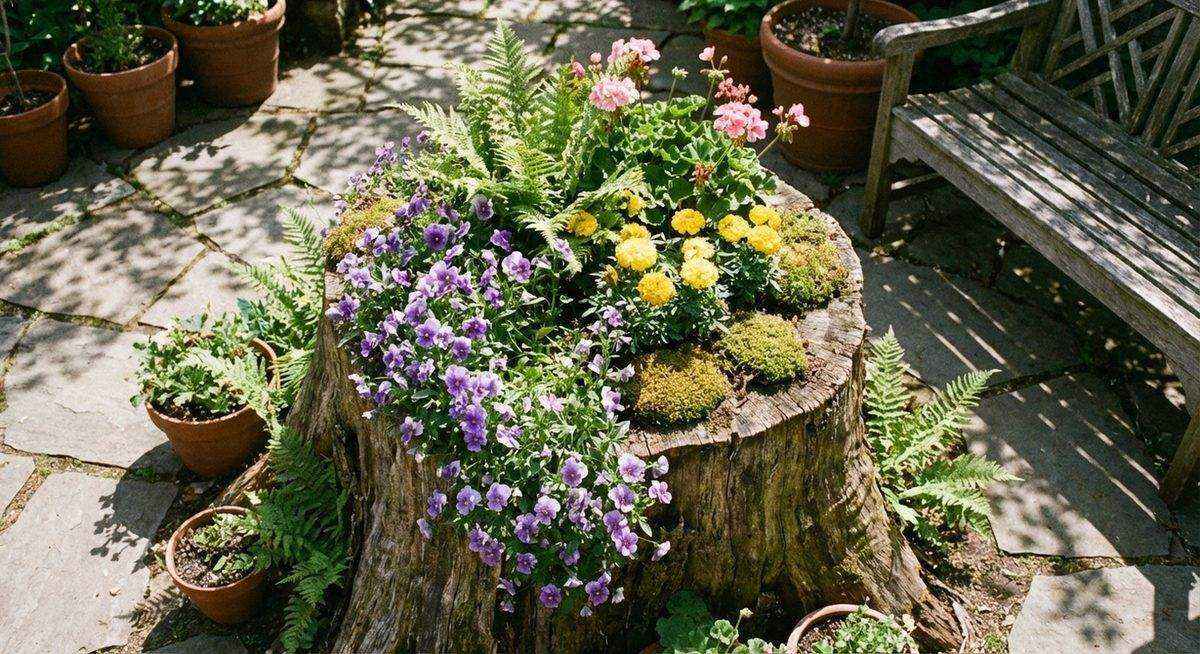
The most straightforward transformation begins with hollowing out the center of a stump to create a rustic planter. By carving a bowl-shaped cavity and filling it with quality potting mix, the stump becomes a ready-made vessel for cascading petunias, vibrant geraniums, or trailing ivy. The key is ensuring adequate drainage by drilling several holes through the base of the cavity.
For larger stumps, consider creating a tiered effect by carving multiple planting pockets at different heights. Succulents work particularly well in shallow cavities, while deeper hollows accommodate seasonal annuals. The natural bark creates a striking contrast against bright blooms — an effect no manufactured planter can replicate.
Fairy Gardens and Miniature Landscapes
Tree stumps provide an elevated stage for miniature garden designs that captivate both children and adults. The natural irregularities of the wood surface suggest pathways, clearings, and hillsides that guide the arrangement of tiny houses, figurines, and micro-plantings.
Start with a layer of fine gravel to establish paths, then introduce miniature moss varieties to simulate lawns. Small-scale succulents like Sempervivum or Sedum make convincing trees when viewed at the right scale. Weatherproof miniature accessories — available at most garden centers — complete the scene. The elevated position of a stump keeps these delicate arrangements visible and accessible for maintenance.
Carved Garden Sculptures
For those willing to invest in professional craftsmanship, chainsaw carving transforms stumps into permanent garden sculptures. Mushroom clusters, woodland animals, and abstract forms are popular choices that celebrate the organic nature of the material. Even simple geometric shapes — a sphere atop a column, for instance — create sophisticated focal points.
After carving, a coat of exterior-grade wood sealant preserves the work against moisture and UV damage. Left to weather naturally, some carved stumps develop a silvered patina that blends beautifully with surrounding plantings.
Functional Stump Furniture
Broader stumps — particularly those from hardwoods like oak or maple — serve admirably as garden tables and seating. A flat cut across the top, followed by thorough sanding and sealing, produces a durable surface that withstands seasons of outdoor use. Grouping several stumps of varying heights creates an informal seating area with genuine character.
For a polished look, consider topping a wide stump with a round piece of tempered glass. The result is a conversation-starting side table that lets the natural grain remain visible while providing a stable surface for drinks and lanterns.
Living Stump Gardens
Rather than fighting the natural decomposition process, embrace it by encouraging moss, lichen, and shade-loving plants to colonize the stump surface. A regular misting schedule and partial shade accelerate this transformation. Over time, the stump becomes a living sculpture — a vertical ecosystem hosting ferns, mosses, and even small fungi that shifts in appearance with the seasons.
Attaching small brackets or shelves to the stump allows for potted plants to be arranged vertically, creating a garden tower effect that maximizes visual impact without occupying ground-level planting space.
Making It Work
Regardless of the chosen approach, treating the stump with a borate-based preservative extends its lifespan considerably. Stumps positioned in full sun dry out and crack faster than those in partial shade, so consider the microclimate before committing to a design. The most successful stump features are those that appear intentional rather than accidental — a deliberate integration of natural elements into the broader garden composition.
Sources & Further Reading
You May Also Like