Old Shoes as Planters: A Charming Garden Upcycling Project
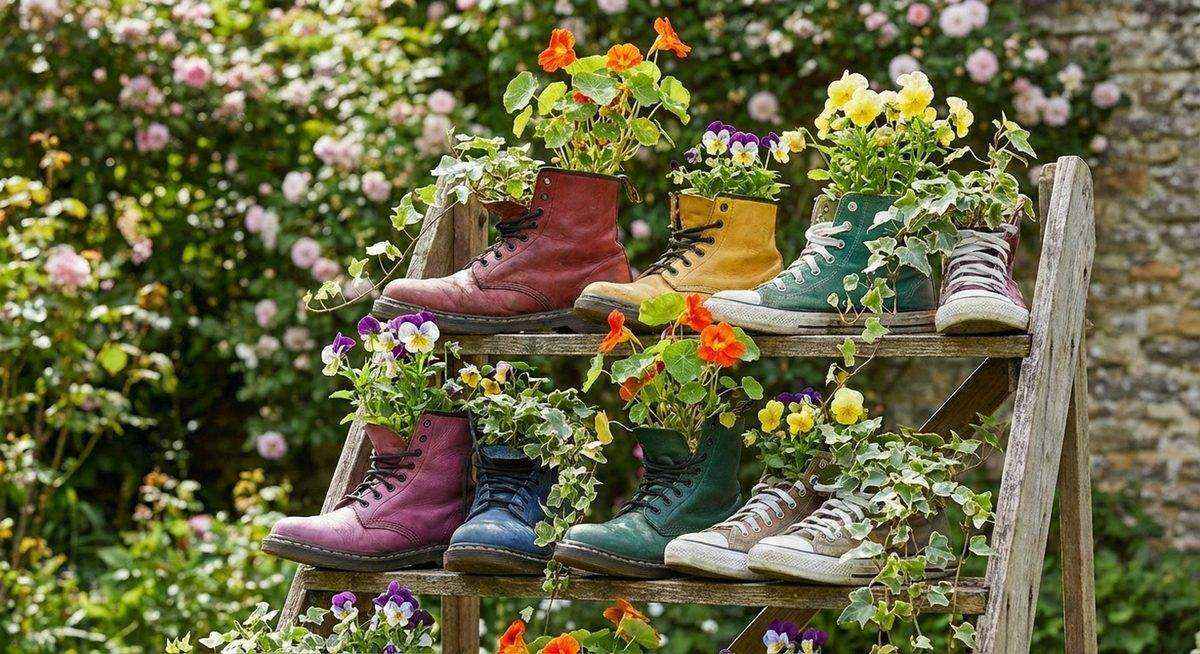
The garden planter market offers no shortage of terracotta, ceramic, and resin options — but none of them carry the instant character of a well-worn boot spilling over with petunias, or a pair of children’s rain boots sprouting succulents on a porch railing. Shoe planters are whimsical, cost nothing, and turn inevitable household waste into something worth noticing.
Choosing the Right Footwear
Leather boots and rubber rain boots last longest outdoors, resisting weather that would dissolve canvas sneakers within a season. Work boots, cowboy boots, hiking boots, and Wellington boots all have the structural rigidity to hold soil without collapsing. Children’s shoes add scale and charm — a row of tiny rain boots along a garden path, each holding a different herb, tells a story of growth in more than one sense.
Avoid shoes with synthetic mesh uppers, which deteriorate quickly in sunlight and rain. High heels and dress shoes work briefly as novelty displays but lack the durability for permanent outdoor use.
Preparation
Drill or punch three to five drainage holes through the sole — essential for preventing root rot. Line the interior with a small piece of landscape fabric to keep soil from washing through the drainage holes while still allowing water to escape. A layer of small pebbles at the bottom provides additional drainage and adds weight to prevent the shoe from tipping in wind.
Planting
Fill the shoe with quality potting mix to within two centimeters of the opening. Compact plants that tolerate shallow root spaces work best: sedums, hen-and-chicks, trailing lobelia, small herbs like thyme or oregano, and compact annuals like violas or miniature petunias. For boots, the taller opening accommodates slightly larger plants — small geraniums, trailing ivy, or ornamental grasses.
Water carefully, as the limited soil volume dries quickly. Daily watering during summer is typical. A slow-release fertilizer pellet mixed into the soil at planting time sustains nutrition for the season.
Display Ideas
Shoe planters gain impact through grouping and context. A cluster of mismatched boots arranged on a potting bench or garden wall creates a charming vignette. A single boot hung on a fence by its laces, trailing flowers from its opening, works as an accent piece. A row of identical rain boots — painted in coordinating colors and planted with a single variety — achieves a more polished, designed look.
For indoor use, waterproof the shoe by lining it with plastic before adding drainage material and soil. Place a saucer beneath to catch any moisture that escapes. Kitchen windowsill herb gardens planted in rain boots or garden clogs add personality to functional growing.
Longevity
Leather boots treated with a waterproofing wax or spray will last two to three seasons outdoors. Rubber boots can persist for years. Apply a UV-resistant clear coat to shoes you want to maintain their color — otherwise, embrace the weathering as part of the charm. A shoe planter that fades and softens with exposure develops a patina that speaks to the passage of time in a garden.
Sources & Further Reading
You May Also Like