One-Room Apartment Ideas That Create Multiple Living Zones
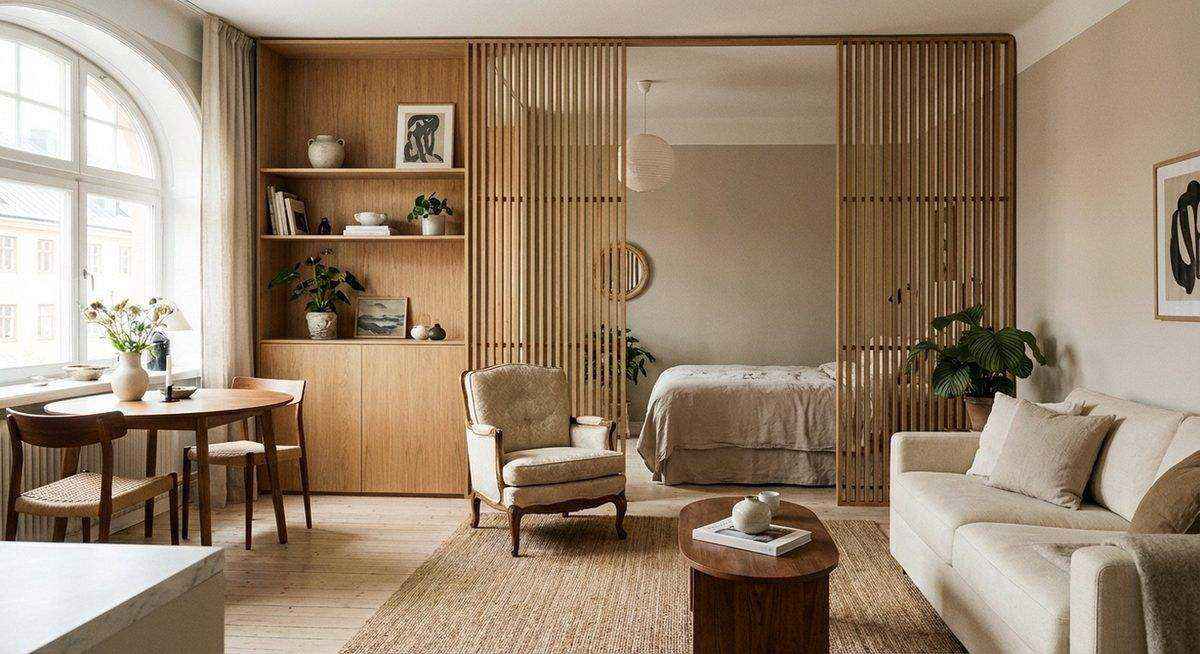
Living in a single room is an exercise in intentional design — every piece of furniture, every visual element, and every spatial relationship must serve the goal of making one room feel like several. The challenge is creating zones that function independently while coexisting within a shared footprint.
Zone Definition Without Walls
The most effective zoning tools are those that suggest separation without enforcing it. A bookshelf positioned perpendicular to the wall divides sleeping from living areas while maintaining light flow and sightlines. A change in flooring material — a rug defining the living area, bare wood beneath the dining table — establishes territorial boundaries underfoot. A ceiling-mounted curtain on a hospital track provides on-demand privacy for the sleeping area without permanent spatial commitment.
Level changes, where ceiling height permits, create the strongest zone definition. A raised platform for the bed, even just 30 centimeters high, visually separates the sleeping area and creates under-platform storage — a double benefit in a space where every cubic centimeter counts.
The Sleeping Zone
Position the bed in the area farthest from the entrance and nearest to the window. This placement ensures that the sleeping zone feels private and protected while benefiting from natural light and ventilation. A headboard or half-wall behind the bed provides psychological enclosure without blocking light.
In extremely compact spaces, a loft bed or Murphy bed that folds into the wall reclaims the bed’s footprint during waking hours. Modern Murphy beds integrate with shelving units that conceal the mechanism and provide display space when the bed is stowed.
The Living Zone
A compact sofa or loveseat, a coffee table that doubles as a dining surface, and a media console or floating shelf for the television create a functional living area within a few square meters. The sofa should face away from the sleeping area, psychologically orienting the occupant toward the living zone and creating a sense of spatial separation through furniture direction alone.
The Working Zone
A narrow desk against a wall, in a corner, or built into a closet provides a workspace that does not compete with the room’s other functions. The desk should have its back to the living area or face a wall to minimize distraction. A task lamp and organized storage keep the work surface functional without spreading into adjacent zones.
The Kitchen Zone
In studios with open kitchens, a counter-height bar or peninsula separates the cooking area from the living space while providing dining seating and additional prep surface. Maintaining a clean, organized kitchen is critical in a one-room apartment — cooking smells, visual clutter, and dirty dishes affect the entire living environment when there is no door to close.
Cohesion Across Zones
A consistent color palette throughout all zones creates the visual continuity that makes a single room read as an intentional home rather than a collection of functional areas. Limit the palette to three or four colors, and repeat them across zones: the cushion color in the living area reappearing as the bed throw in the sleeping zone, the desk lamp matching the kitchen pendant. These threads of consistency stitch the zones together into a unified design.
Sources & Further Reading
You May Also Like